A clear and simple explanation of deflation and how it impacts consumers, businesses, and the global economy.
Deflation is one of the most misunderstood economic concepts, but it plays a major role in how markets behave.
As global economies adjust to inflation waves seen in previous years, understanding deflation is becoming increasingly important.
Deflation can create opportunities, but it can also signal deeper economic problems.
This guide explains what deflation is, what causes it, and how it affects you.
🔍 1. What Is Deflation?
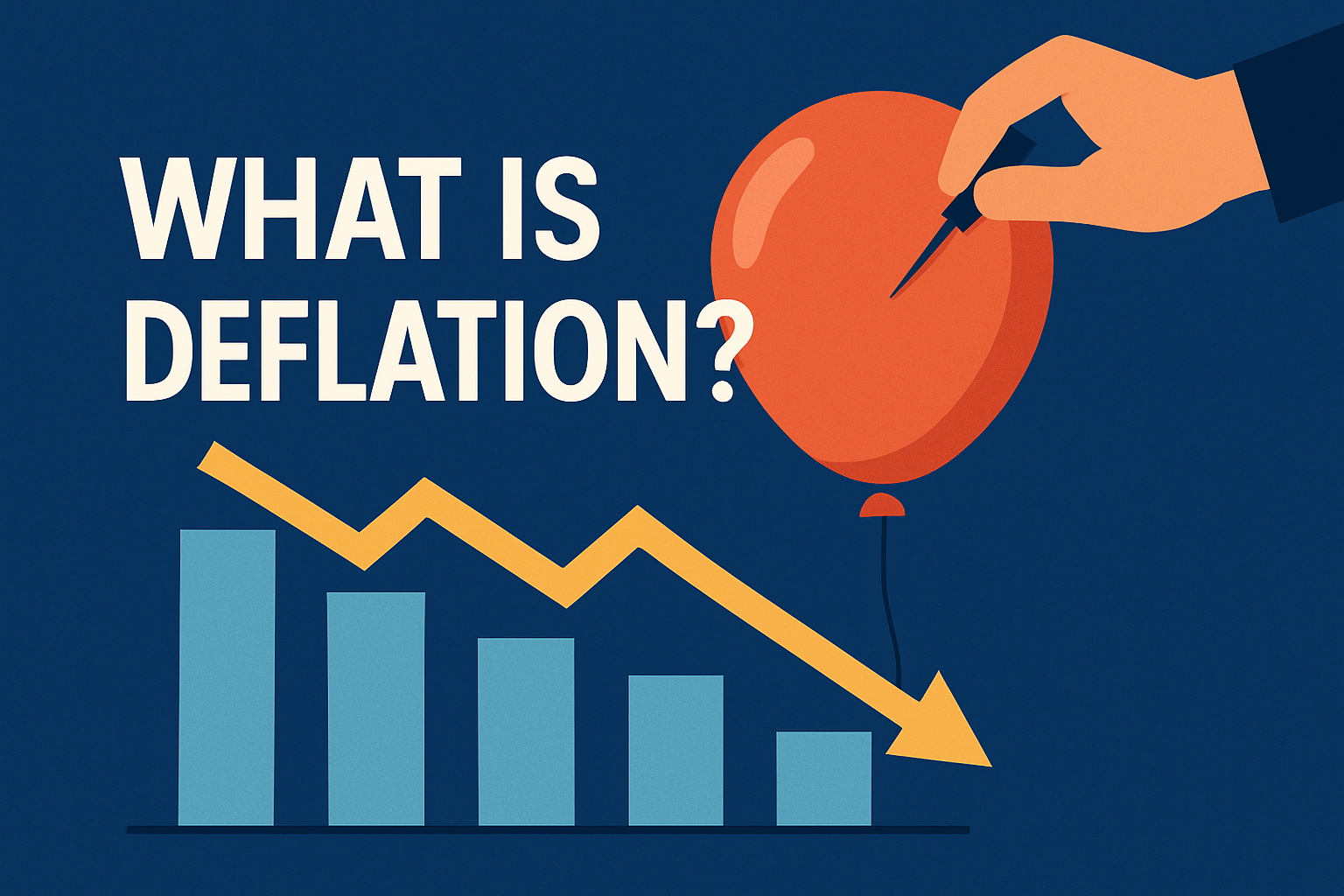
Deflation is a general decrease in the price of goods and services over time.
In simple terms, things become cheaper.
Opposite of inflation (prices go up), deflation means the economy is slowing, demand is weakening, or productivity is rising faster than spending.
🧠 2. What Causes Deflation?
✔ Decrease in consumer demand
People buy less, businesses lower prices.
✔ Increase in supply or productivity
More products available → prices drop.
✔ Tight monetary policy
High interest rates reduce spending and borrowing.
✔ Economic recession
Companies cut wages and investment, reducing prices.
✔ Technological advances
Technology makes production cheaper, reducing costs.
⚠️ 3. Is Deflation Good or Bad?
Deflation can be both positive and negative, depending on why it happens.
✔ Good deflation (healthy)
Driven by productivity and innovation Technology reduces production costs Consumers benefit from cheaper goods
Ex: electronics and smartphones dropping in price.
❌ Bad deflation (dangerous)
Caused by weak demand Companies cut wages Unemployment rises Economic recession intensifies
This type of deflation can slow the entire economy.
💰 4. How Deflation Affects Consumers
Pros
Lower prices Increased purchasing power Savings last longer
Cons
Lower wages Fewer job opportunities Businesses may shut down Borrowing becomes more expensive in real terms
Your money buys more — but opportunities shrink.
📉 5. How Deflation Affects Businesses
Lower profits Reduction in workforce Less investment Debt becomes harder to pay
Companies often struggle to survive long periods of deflation.
🏦 6. How Governments and Central Banks Fight Deflation
To combat deflation, central banks typically:
Lower interest rates Inject liquidity into financial markets Increase money supply Stimulate public spending
The goal is to encourage borrowing, investment, and consumption.
🔮 7. Is Deflation a Risk in 2025?
Some economists believe deflation could appear in certain regions due to:
Slowing global demand High interest rates in 2023–2024 Inventory surpluses Cheaper energy and technology
Others argue inflation will remain the bigger risk.
Either way, understanding deflation helps you navigate both possibilities.
🟣 Conclusion
Deflation isn’t always negative — sometimes it results from innovation and efficiency.
But long-term, deep deflation can signal economic trouble.
Knowing how deflation works helps consumers, investors, and businesses make better decisions in a changing global economy.
About The Author