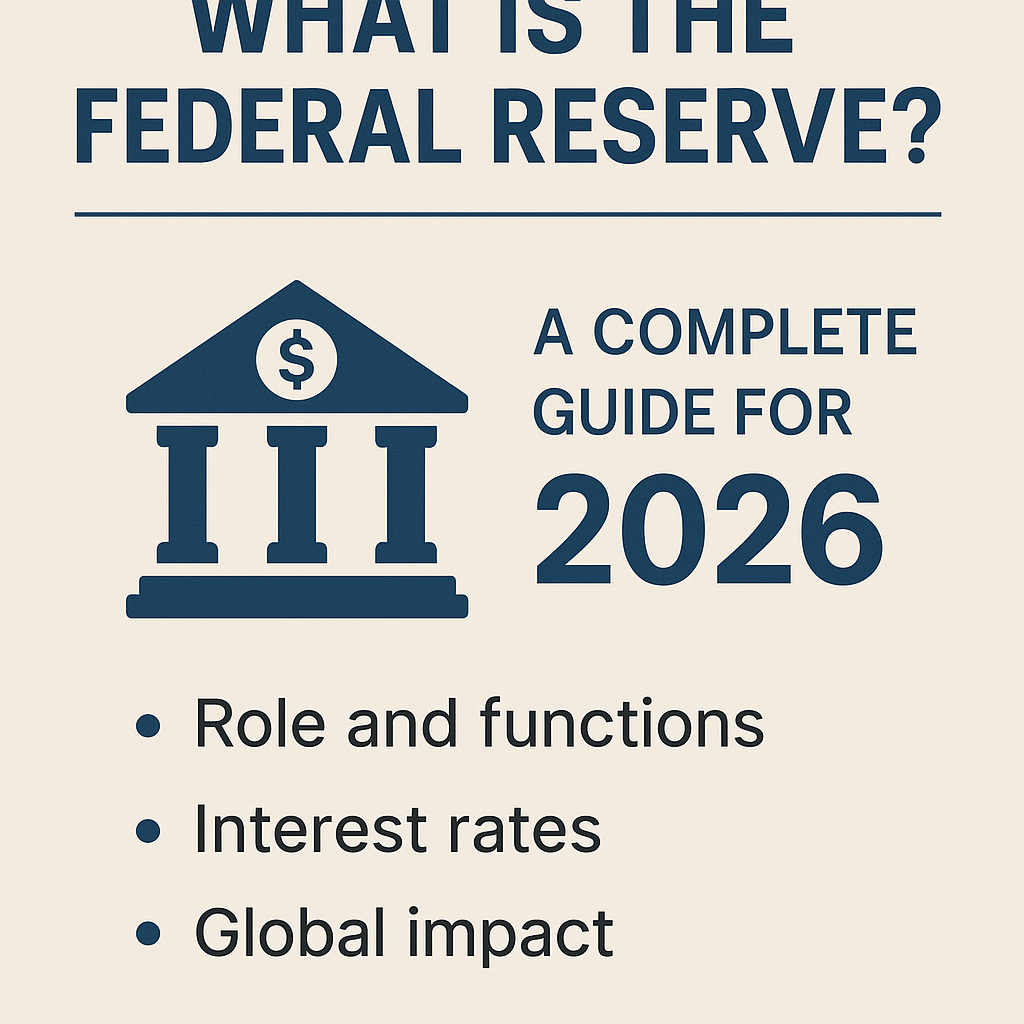
The Federal Reserve, commonly known as the FED, is the central bank of the United States and one of the most powerful financial institutions in the world. Its decisions influence global markets, interest rates, inflation, and even the value of currencies like the dollar.
In this guide, you’ll learn what the FED is, how it works, and why its decisions matter for the economy in 2026.
✅ What Is the FED?
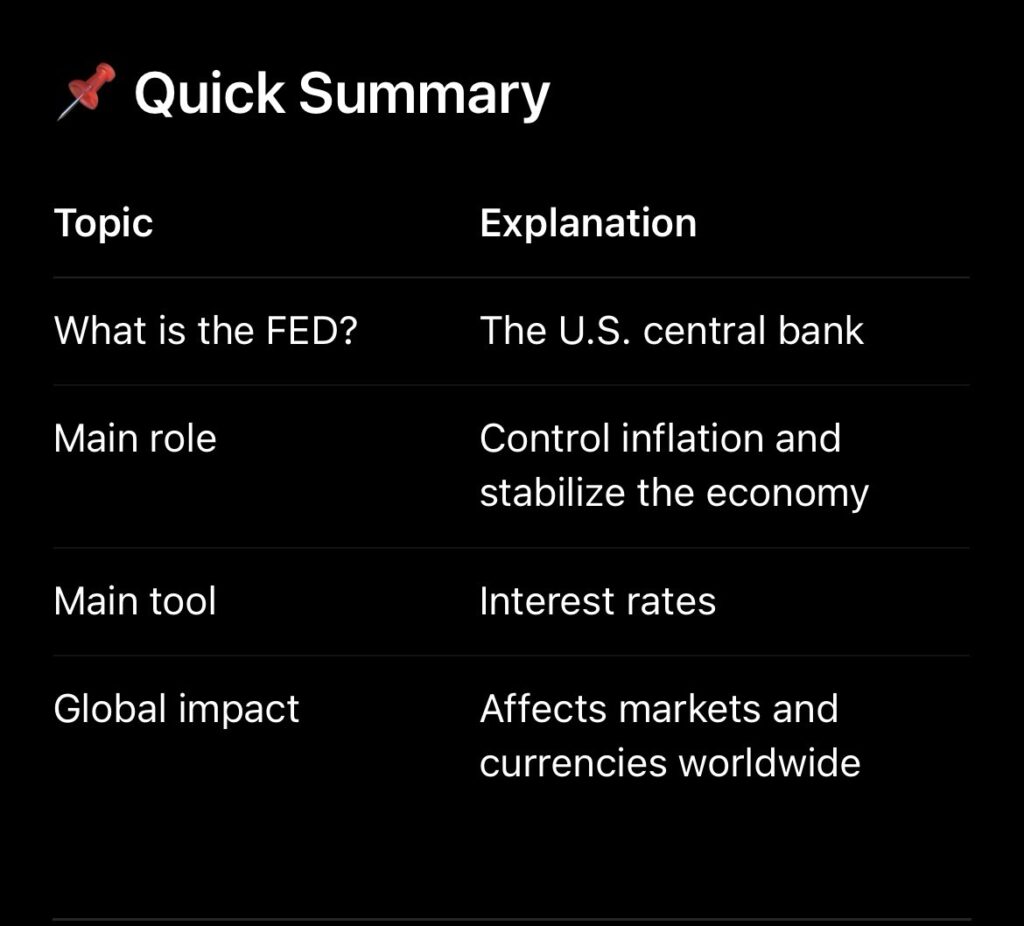
The Federal Reserve (FED) is the central banking system of the United States.
Its main purpose is to maintain stability in the financial system, control inflation, and ensure healthy economic growth.
🧩 What Does the FED Do?
The FED has several key responsibilities:
1. Controls interest rates
The FED can raise or lower interest rates to influence the economy.
Higher rates → reduce inflation but slow down spending Lower rates → stimulate the economy but may increase inflation
2. Regulates banks
The FED monitors banks to ensure safety and prevent financial crises.
3. Controls the money supply
The FED can increase or decrease the amount of money circulating in the economy.
4. Maintains financial stability
It acts during crises, such as recessions or banking collapses.
5. Manages U.S. monetary policy
The FED sets policies that affect borrowing, saving, and investment.
📊 Why the FED Matters in 2026
In 2026, global markets are highly sensitive to changes in interest rates and inflation.
Because the U.S. dollar is the most used currency in the world, FED decisions affect:
Stock markets Crypto markets Global trade Exchange rates Loan and mortgage rates Investments worldwide
Even in Brazil and other countries, the FED influences local economic conditions.
🔍 Who Runs the FED?
The FED is divided into:
Board of Governors 12 Regional Federal Reserve Banks Federal Open Market Committee (FOMC) → responsible for interest rate decisions
The Chair of the FED is one of the most influential economic leaders in the world.
📈 How the FED Raises or Cuts Interest Rates
The FED uses the Federal Funds Rate, which affects all other interest rates in the country.
Reasons to raise rates:
Inflation is too high Economy is overheating
Reasons to cut rates:
Recession risk Unemployment rising Stimulate growth
🌍 How FED Decisions Affect Other Countries
Even though the FED is a U.S. institution, its decisions:
Strengthen or weaken the dollar Influence foreign investment Impact commodity prices (oil, gold, etc.) Affect global inflation
This is why traders, investors, and governments watch the FED closely.
🎯 Conclusion
The Federal Reserve plays a crucial role in the world economy.
Its decisions on interest rates and monetary policy influence not only the United States but also global markets, investments, and currencies.
Understanding how the FED works helps investors, traders, and consumers make better financial decisions in 2026 and beyond.
About The Author