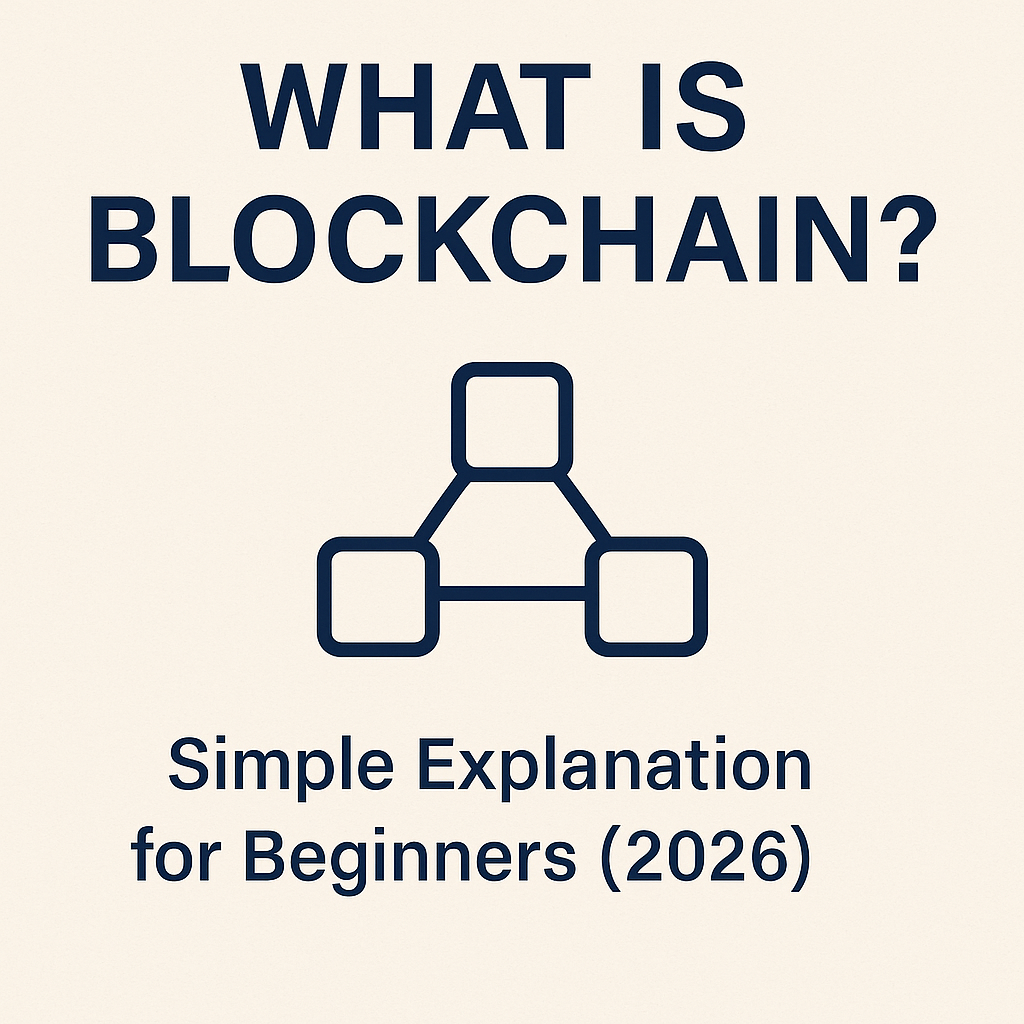
The term blockchain is everywhere in the crypto world, but many people still don’t fully understand what it means.
In simple words, blockchain is the technology that makes Bitcoin, Ethereum, stablecoins, and most cryptocurrencies possible.
Here’s a clear beginner-friendly guide explaining what blockchain is, how it works, and why it matters in 2026.
✅ What Is Blockchain?
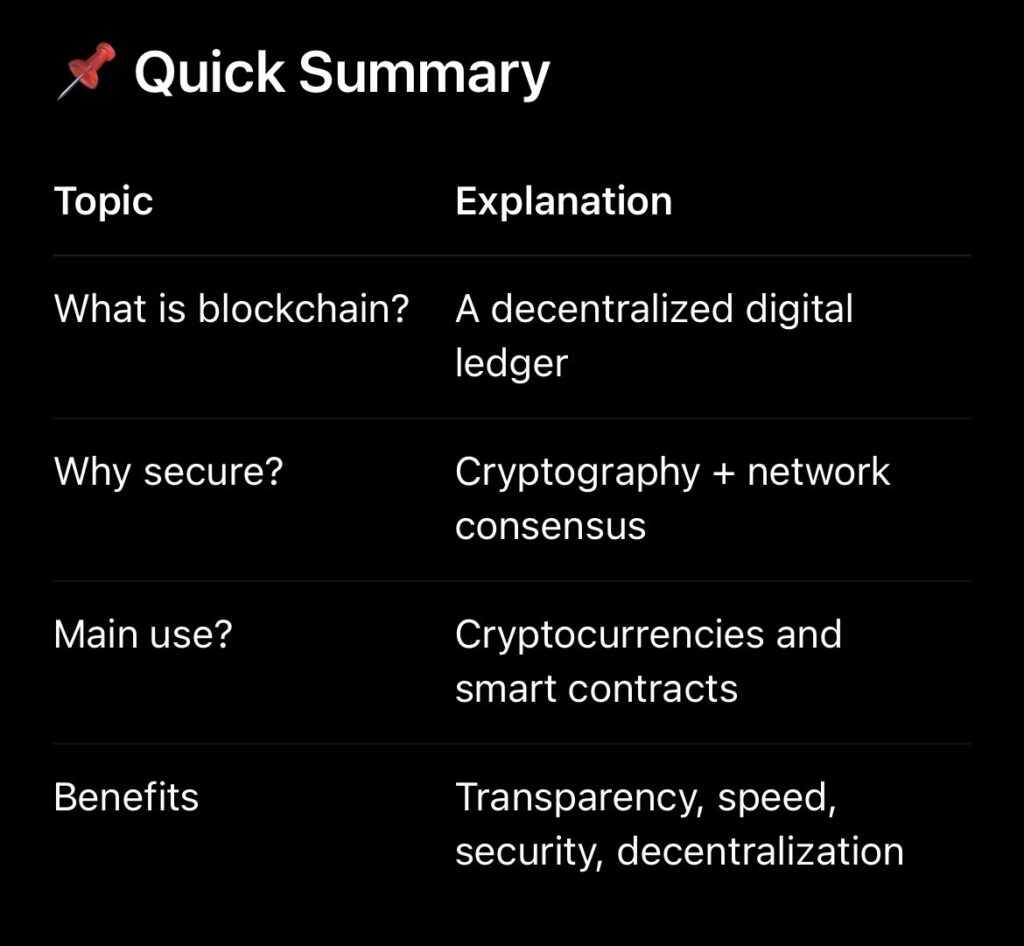
Blockchain is a digital, decentralized, and public ledger that records transactions across many computers.
Once data is added, it cannot be changed — making blockchain secure and transparent.
Think of it as a shared database that everyone can verify, but no one can secretly modify.
🧩 How Blockchain Works (Simple Explanation)
Blockchain is made of:
Blocks → pieces of data Chain → blocks connected in order Nodes → computers that validate everything
🔒 1. A transaction happens
Example: someone sends Bitcoin.
📦 2. The transaction goes into a “block”
Like adding a page to a notebook.
🔗 3. The block is added to the chain
It links to the previous block using cryptography.
🧠 4. Thousands of computers validate it
No single person controls it.
That’s why blockchain is considered trustless—
you don’t need a bank or company to “trust”; the network itself ensures security.
💡 Why Blockchain Matters
✔ Transparency
Anyone can verify transactions.
✔ Security
Cryptographic validation prevents fraud.
✔ Decentralization
No single entity controls the system.
✔ Fast, global payments
Send value across countries in seconds.
✔ Foundation of Web3
NFTs, DeFi, smart contracts — all built on blockchain.
🪙 Where Blockchain Is Used Today
Bitcoin and cryptocurrencies Smart contracts (Ethereum, Solana, etc.) Stablecoins (USDT, USDC, DAI) DeFi platforms Tokenized assets Cross-border payments Supply chain tracking Digital identity
In 2026, blockchain adoption continues growing across banks, governments, and global companies.
🎯 Conclusion
Blockchain is the core technology behind the entire crypto ecosystem.
Understanding how it works helps beginners navigate Bitcoin, Ethereum, NFTs, stablecoins, DeFi — and everything coming in 2026 and beyond.
About The Author