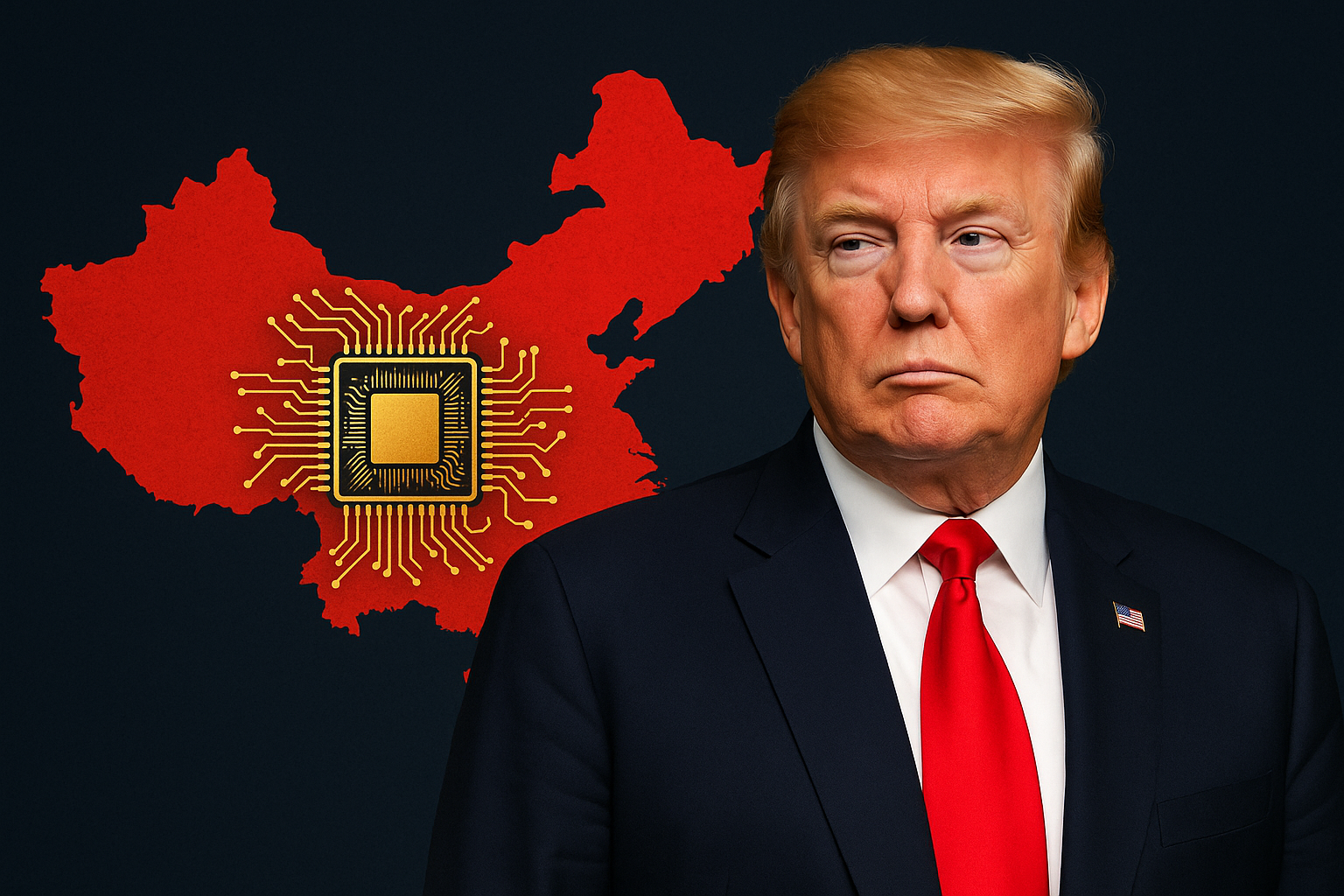
In a major reversal of previous U.S. export restrictions, President Donald Trump has approved Nvidia to resume sales of its advanced H200 artificial intelligence chips to certain “approved buyers” in China.
The move marks one of the most significant shifts in U.S.–China tech policy in years — and it has massive implications for global AI development, geopolitics, and the semiconductor industry.
⚡ A Big Win for Nvidia: Access to a Multi-Billion-Dollar Market
China is Nvidia’s second-largest market, and restrictions imposed in previous years blocked the company from selling its most powerful AI chips to Chinese tech firms.
Now, with Trump’s approval:
Nvidia can sell H200 AI chips to Chinese firms The U.S. government will collect a 25% fee on each shipment Buyers must pass national security screening The most advanced chips (like the next-generation Blackwell/Rubin series) remain restricted
This decision immediately boosted market sentiment around Nvidia, with analysts projecting billions in potential new revenue.
🌍 Why This Move Changes the Global AI Landscape
China has one of the fastest-growing AI sectors on the planet.
With access to Nvidia’s H200 chips:
🔹 Chinese companies can accelerate:
training of large language models generative AI projects cloud computing upgrades advanced data-center infrastructure
🔹 Major Chinese buyers already lining up:
ByteDance (TikTok) Alibaba Cloud Tencent Baidu
Reports say these companies expressed immediate interest after Trump’s announcement.
🇺🇸 Why the Trump Administration Approved the Deal
The decision appears to balance economic goals with national security concerns.
✔ Economic benefits:
Increased U.S. revenue Higher tax collection from chip sales Boost to American semiconductor leadership Stronger positioning of Nvidia in global competition
✔ Security controls:
Only approved companies can purchase Chips undergo U.S. review before export Blackwell/Rubin chips still banned Buyers must not be tied to sensitive military sectors
Trump framed the deal as “smart business that benefits American companies without compromising security.”
⚠️ Critics Warn of Potential Risks
Not everyone supports the decision.
U.S. lawmakers and analysts argue:
China could use AI hardware for military or surveillance applications Access to state-of-the-art chips may accelerate China’s tech rise The U.S. could lose strategic advantage in AI competition China might reverse-engineer future chip technologies
Some warn that the decision will “supercharge China’s AI capabilities.”
📉 Will China Even Buy the Chips? Nvidia Isn’t Completely Sure
Nvidia’s CEO Jensen Huang commented that demand is uncertain, as Chinese manufacturers have been prioritizing home-grown chips during the ban.
China may:
diversify its tech suppliers continue investing in domestic semiconductors reduce reliance on U.S. hardware
So while the approval opens the door, the actual demand could vary.
📈 What Investors Should Watch Next
This decision could spark:
new rounds of U.S.–China tech negotiations increased competition in global semiconductors shifts in AI development timelines big earnings jumps for Nvidia potential political backlash other firms lobbying for similar approvals
The semiconductor war is far from over — but Nvidia just regained a massive advantage.
📝 Conclusion
Allowing Nvidia to sell advanced H200 AI chips to China marks a turning point in U.S. tech strategy.
It strengthens Nvidia, opens billions in potential revenue, and accelerates global AI growth — while also raising national-security and geopolitical concerns.
2025 may go down as the year where AI, politics, and global business collided more intensely than ever.
About The Author