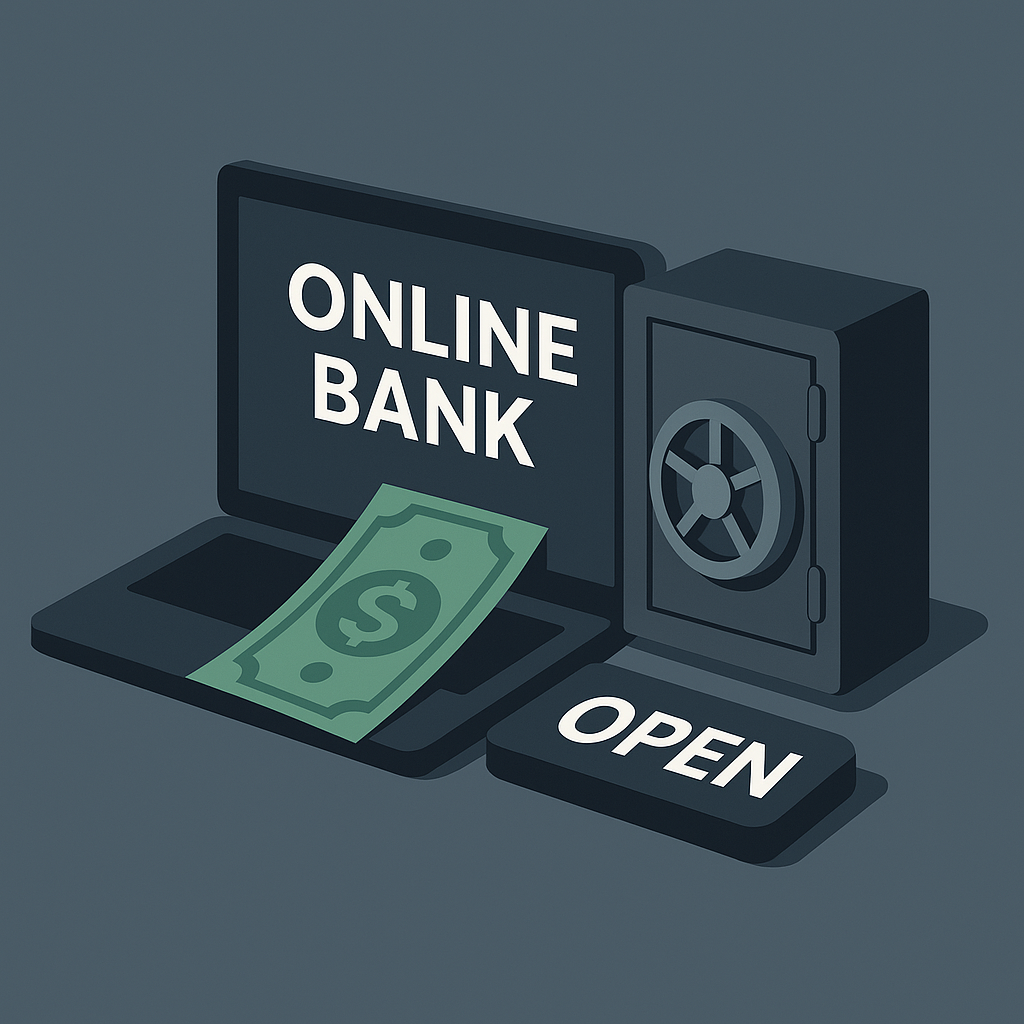
As traditional banks continue offering low interest rates, millions of Americans are shifting their savings to high-yield online banks in 2025. These digital institutions now provide some of the most competitive returns in the U.S. financial market — and the trend is accelerating fast.
1. Higher APYs Compared to Traditional Banks
Most large brick-and-mortar banks still pay 0.01% to 0.20% APY, while many online banks offer 4% to 5.50% APY with no minimum balance.
This difference is pushing savers to migrate their emergency funds, checking accounts, and even long-term savings to digital platforms.
2. Lower Fees and More Flexibility
Online banks typically charge fewer fees because they don’t operate physical branches.
Customers benefit from:
No monthly maintenance fees Higher withdrawal limits Faster transfers Fee-free debit cards
This makes them attractive for both everyday banking and short-term investing.
3. FDIC Insurance Brings Security
Many Americans who were initially skeptical of digital banking have grown comfortable knowing that reputable online banks are FDIC-insured up to $250,000 per depositor.
This provides the same level of protection as traditional banks.
4. Rising Cost of Living Is Changing Habits
With inflation still impacting household budgets, people want their money to work harder.
High-yield savings accounts allow savers to:
Grow emergency funds faster Offset inflation Earn passive income with no risk
This shift has become a mainstream financial strategy in 2025.
5. Tech-Savvy Generation Prefers Digital Banking
Gen Z and Millennials, who make up a large portion of new savers, often prioritize:
User-friendly apps Quick onboarding Instant notifications 24/7 customer support
Digital banks are built precisely for these expectations.
Conclusion
The move toward high-yield online banks is not just a trend—it’s becoming the new standard for personal finance in the United States.
With higher returns, lower fees, and strong security, more Americans are expected to migrate their savings online throughout 2025.
About The Author