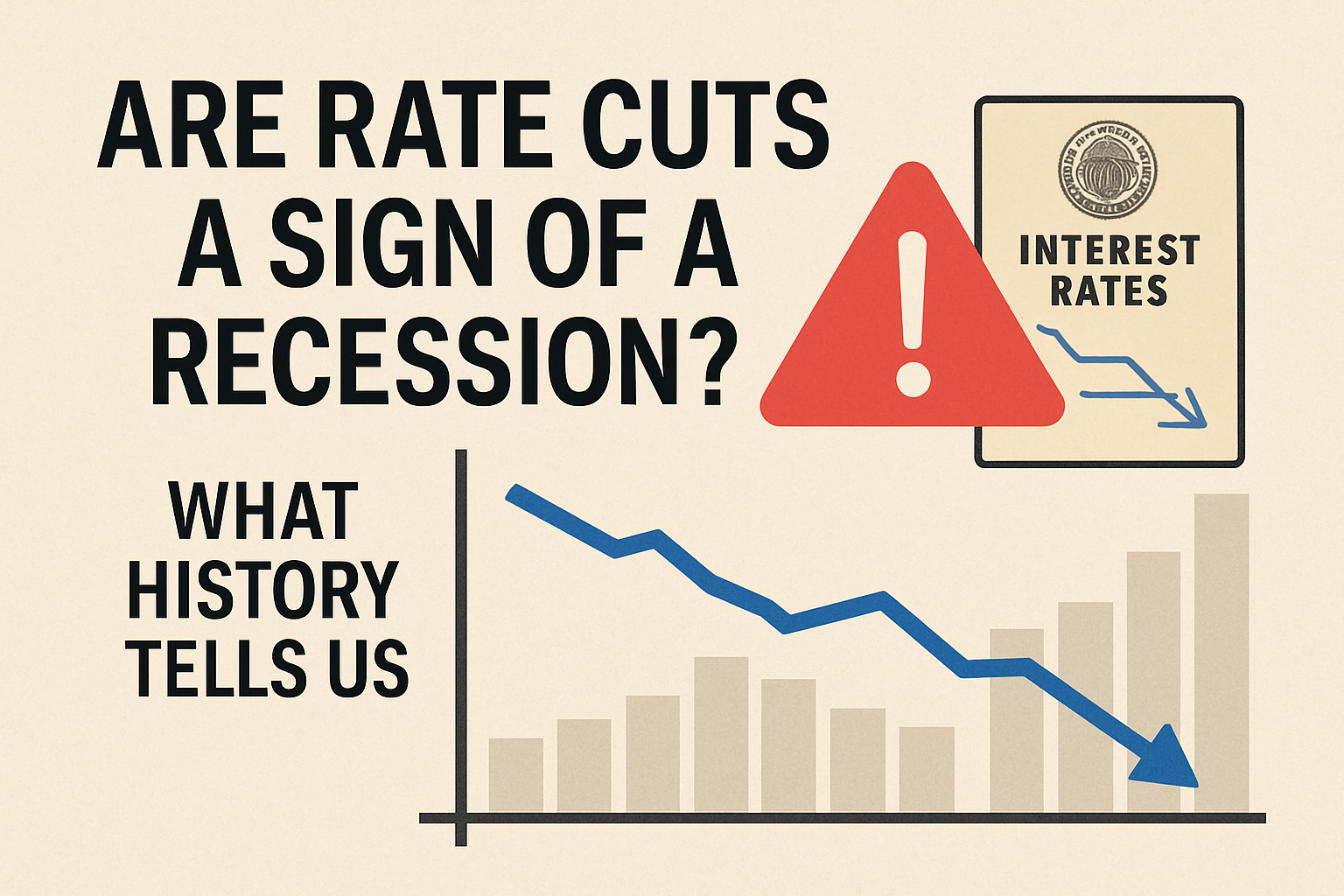
When the Federal Reserve cuts interest rates, one question immediately comes to mind:
Is a recession coming?
In 2026, with the Fed shifting toward lower rates, many Americans are wondering whether history is repeating itself. This article explains what rate cuts really mean — and whether they signal economic trouble ahead.
Why the Fed Cuts Interest Rates
Rate cuts are usually a response to:
Slowing economic growth Rising unemployment risks Weak consumer spending Financial market stress
The Fed’s goal is to stimulate the economy before conditions worsen.
Do Rate Cuts Always Mean a Recession?
Not necessarily.
Historically:
Some rate cuts prevented recessions Others happened after a slowdown had already started
Rate cuts are more of a warning signal than a guarantee.
What History Shows
Looking at past cycles:
2001: Rate cuts followed the dot-com crash 2008: Aggressive cuts during the financial crisis 2020: Emergency cuts due to the pandemic
In contrast, some mid-cycle cuts supported growth without a recession.
Signs That Matter More Than Rate Cuts
To assess recession risk, economists watch:
Unemployment trends Consumer confidence Corporate earnings Yield curve inversions Credit market stress
Rate cuts alone don’t tell the full story.
How Markets React to Rate Cuts
Financial markets often react positively at first:
Stocks may rally Bonds adjust to new yields Risk assets gain momentum
But volatility can increase if economic data worsens.
What This Means for Consumers
For everyday Americans:
Loans may become cheaper Job market conditions matter more than rates Savings yields may decline
Smart financial planning matters more during uncertain cycles.
Final Thoughts
A Fed rate cut is not an automatic recession signal, but it does mean policymakers see risks ahead. Understanding the broader economic picture helps investors and consumers make better decisions in 2026.
About The Author