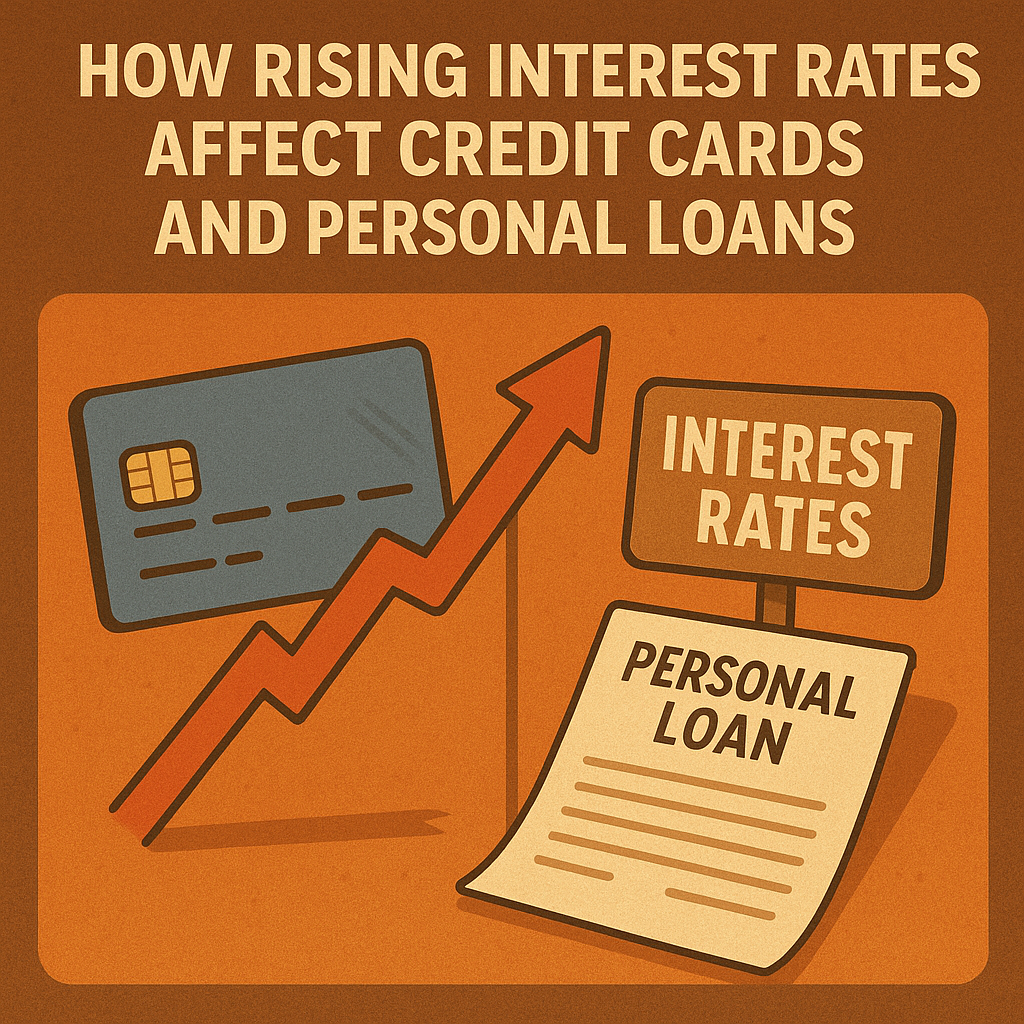
Interest rates remain high in 2025, and millions of Americans are feeling the impact — especially when it comes to credit cards and personal loans.
But how exactly do rising rates affect your debt, and what can you do about it?
Why Interest Rates Are Still High
The Federal Reserve raises interest rates to fight inflation.
Higher rates:
Reduce consumer spending Slow down borrowing Control price increases
However, they also make debt more expensive.
How Credit Card APR Is Affected
Most credit cards have variable APRs, meaning:
When the Fed raises rates, credit card interest increases Monthly interest charges grow Minimum payments may rise
In 2025, average credit card APRs are near record highs, making revolving balances extremely costly.
Impact on Personal Loans
Personal loans are also affected, especially new ones.
What changes:
Higher interest rates on new loans Stricter approval requirements Higher monthly payments
Borrowers with lower credit scores are hit the hardest.
How Much More Are Consumers Paying?
Even a small rate increase can mean:
Hundreds of dollars more per year in interest Longer payoff times Higher total debt cost
This is why managing debt is more important than ever.
What You Can Do to Reduce Interest Costs
Here are smart strategies in 2025:
Pay more than the minimum on credit cards Consider balance transfer cards (0% APR offers) Refinance personal loans if rates drop Avoid new high-interest debt
Financial discipline matters more in high-rate environments.
Should You Refinance or Wait?
If your credit score improved, refinancing may help.
If rates are expected to fall, waiting could make sense — but timing the market is risky.
Final Thoughts
High interest rates hurt borrowers, but informed decisions can reduce the damage.
Understanding how rates affect your debt is the first step toward financial stability.
About The Author