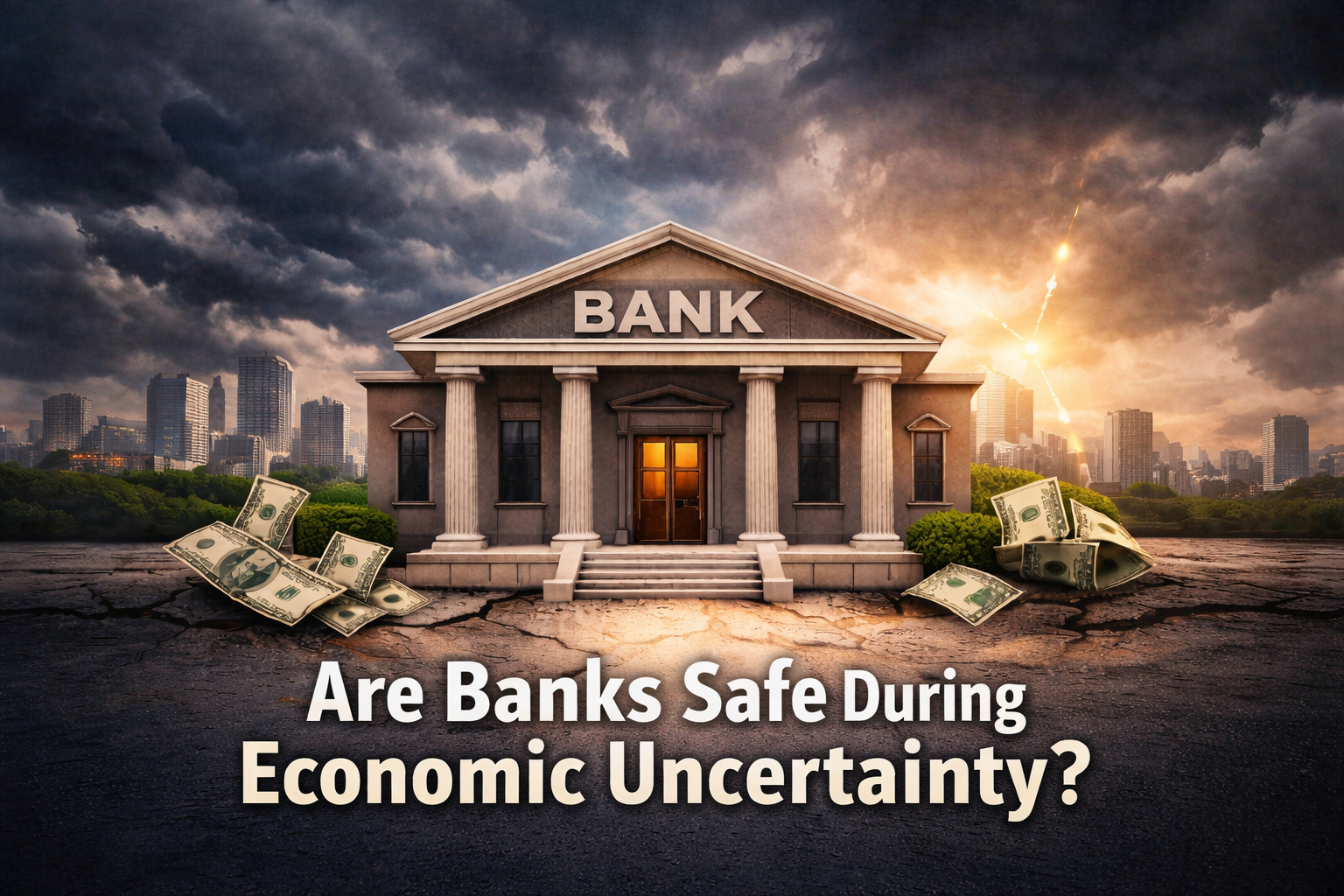
Economic uncertainty often raises concerns about the safety of bank deposits. Financial crises, inflation, and global instability can make people question whether banks are truly secure.
How Modern Banking Systems Work
Today’s banking systems are heavily regulated. Most countries require banks to:
Maintain capital reserves Follow strict risk management rules Participate in deposit insurance programs
These measures are designed to protect depositors and maintain financial stability.
Deposit Insurance Explained
In many countries, deposits are insured up to a certain limit by government-backed programs. This means that if a bank fails, depositors are protected up to the insured amount.
This protection significantly reduces the risk for everyday savers.
What Happens During Economic Crises
During economic downturns:
Banks may reduce lending Credit becomes more expensive Interest rates may fluctuate
While financial markets can be volatile, banking systems are structured to absorb shocks and prevent widespread collapse.
Real Risks Depositors Face
The most common risks are not bank failures, but:
Inflation eroding savings Low interest rates Reduced purchasing power
In extreme situations, temporary withdrawal restrictions may occur, but these are rare.
How to Protect Your Money
Practical risk management strategies include:
Staying within insured limits Diversifying across institutions Combining savings with long-term investments
Final Thoughts
Banks are generally safe, even during uncertain times. The greater threat is not losing money outright, but losing value slowly through inflation.
About The Author