Interest rates have been climbing in many countries, and that affects more than just big banks — it impacts everyday consumers too. Whether you’re borrowing, saving, or investing, rising interest rates are a key economic factor you should understand.
🧾 What Are Interest Rates?
Interest rates are the cost of borrowing money.
When central banks raise rates, it becomes more expensive to borrow but more rewarding to save.
Key areas affected include:
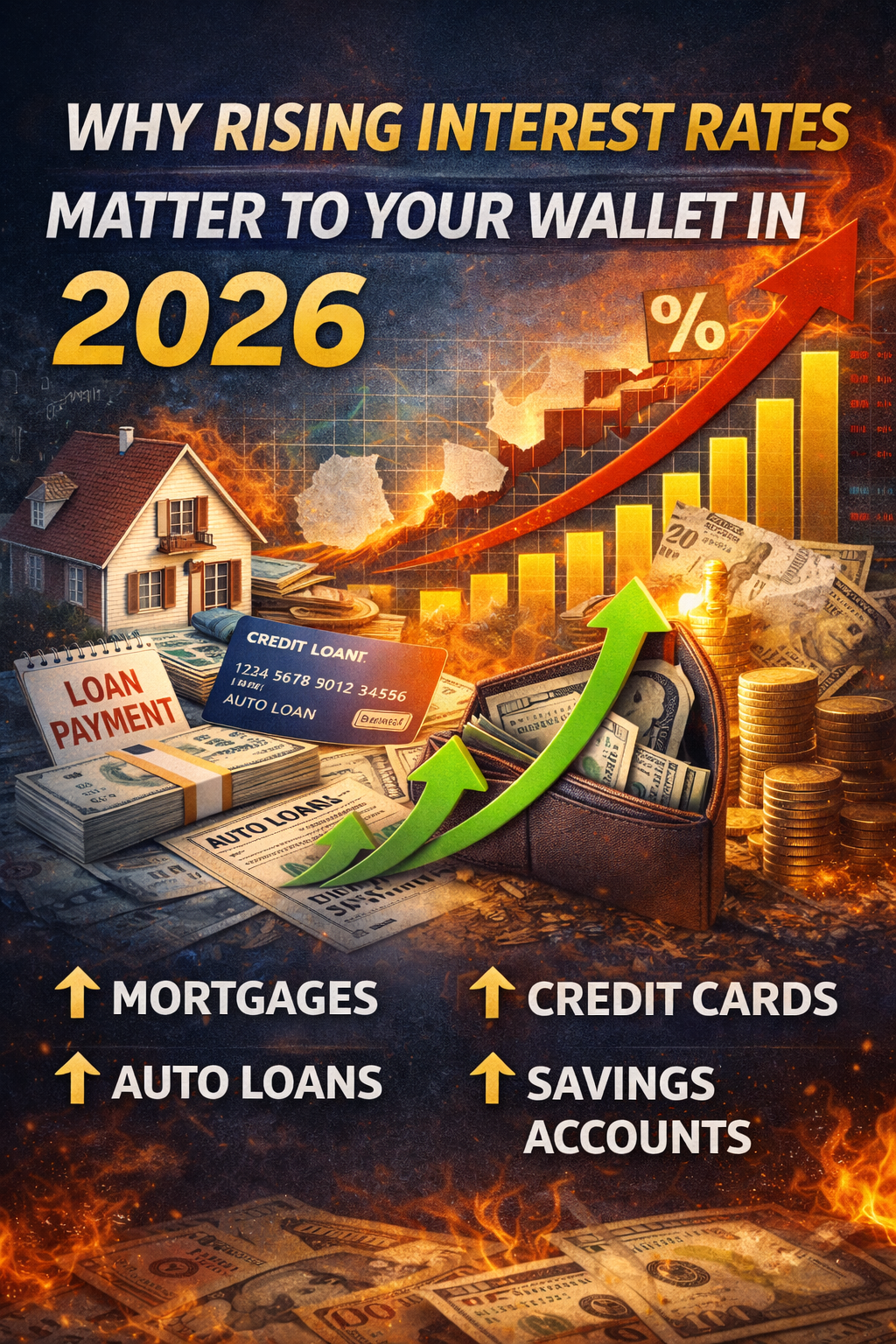
Mortgages Credit cards Auto loans Business loans Savings and fixed income
🏡 Impact on Borrowing
Higher interest rates tend to increase monthly payments for:
Home loans (mortgages) Personal loans Student debt
This means your budget may feel tighter, even if your income stays the same.
💼 Impact on Savings and Investments
On the positive side, higher rates can:
Increase yields on savings accounts Boost returns on short-term bonds Provide better passive income from fixed-income investments
If you hold cash, higher interest rates can work in your favor.
📊 What It Means for the Economy
Rising interest rates are often used to control inflation.
But they can also slow economic growth by reducing spending and borrowing.
This is why rate hikes are a balancing act for policymakers.
💡 What You Can Do
Here are practical steps:
✔️ Review debt repayment plans
✔️ Consider high-yield savings or money market options
✔️ Lock in fixed-rate loans if possible
✔️ Rebalance your investment portfolio
About The Author