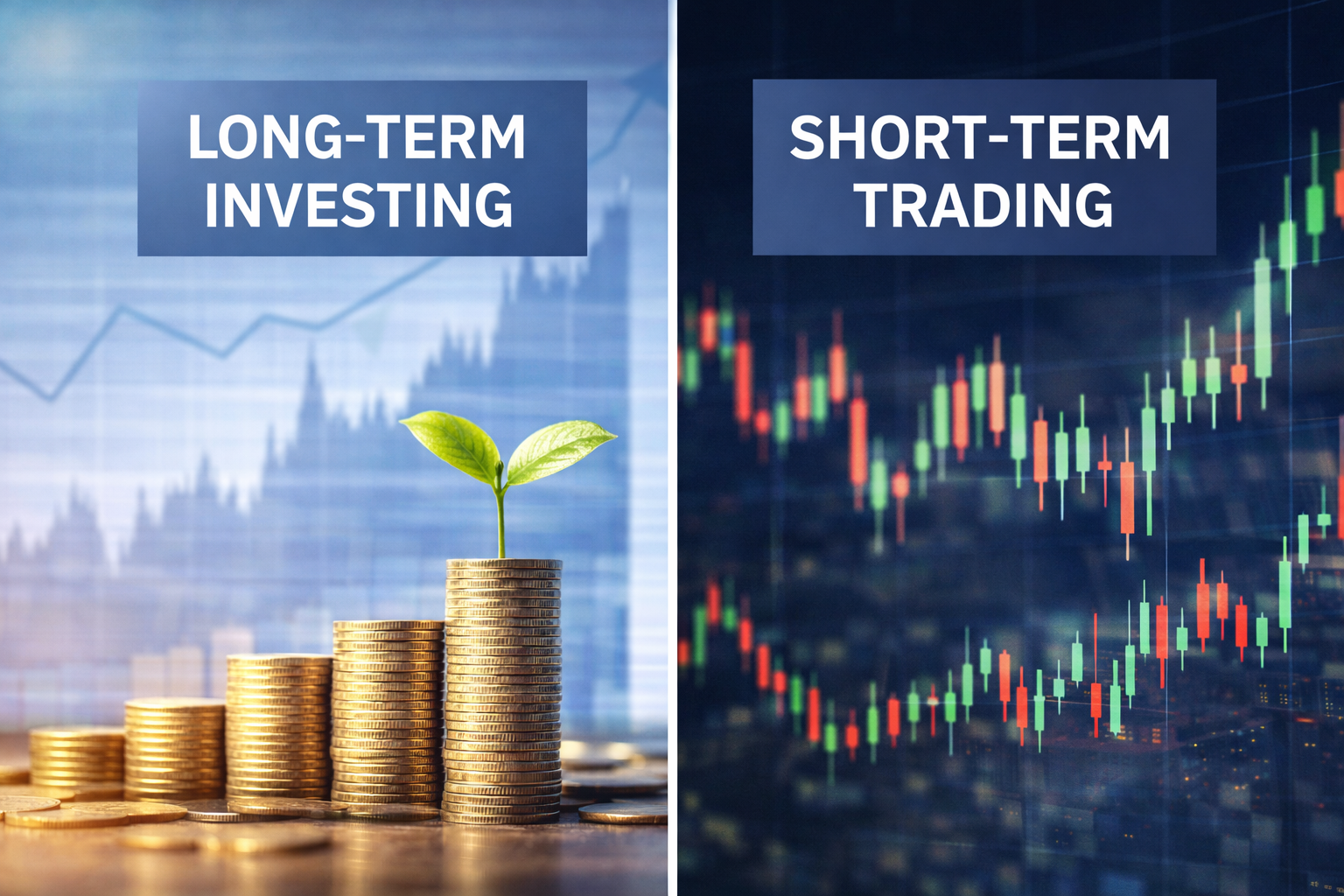
In financial markets, investors often face a fundamental choice: long-term investing or short-term trading. While trading promises quick profits, long-term investing has consistently proven to be the more reliable strategy for building sustainable wealth.
Understanding the differences between these approaches is essential for anyone looking to make informed investment decisions.
What Is Long-Term Investing?
Long-term investing focuses on holding assets — such as stocks, ETFs, or funds — for years or even decades. The goal is to benefit from:
Compound interest Business growth over time Market expansion and innovation
Rather than reacting to short-term price movements, long-term investors rely on fundamentals and macro trends.
The Power of Compounding
Compounding is often called the eighth wonder of the world in finance. When returns are reinvested, capital grows exponentially over time.
For example, an average annual return of 8% may seem modest, but over 20 or 30 years, it can multiply an initial investment several times over.
Risks of Short-Term Trading
Short-term trading involves frequent buying and selling based on market fluctuations. While some traders succeed, the approach comes with:
Higher transaction costs Emotional decision-making Increased exposure to market volatility
Statistically, most retail traders underperform the market over long periods.
Why Time in the Market Matters
One of the most common investment mistakes is trying to time the market. Missing just a few of the best trading days can significantly reduce long-term returns.
Long-term investors benefit from staying invested through market cycles rather than attempting to predict short-term movements.
Conclusion
For most investors, long-term investing remains the most effective and disciplined strategy. It reduces stress, lowers costs, and aligns capital growth with the real expansion of the global economy.
Short-term trading may offer excitement, but long-term investing builds wealth.
About The Author