The United States financial landscape enters 2026 marked by cautious optimism, persistent inflation concerns, and intense attention on monetary policy. Investors, businesses, and consumers are closely watching economic data as markets attempt to balance growth prospects with tighter financial conditions.
📊 Monetary Policy and Interest Rates
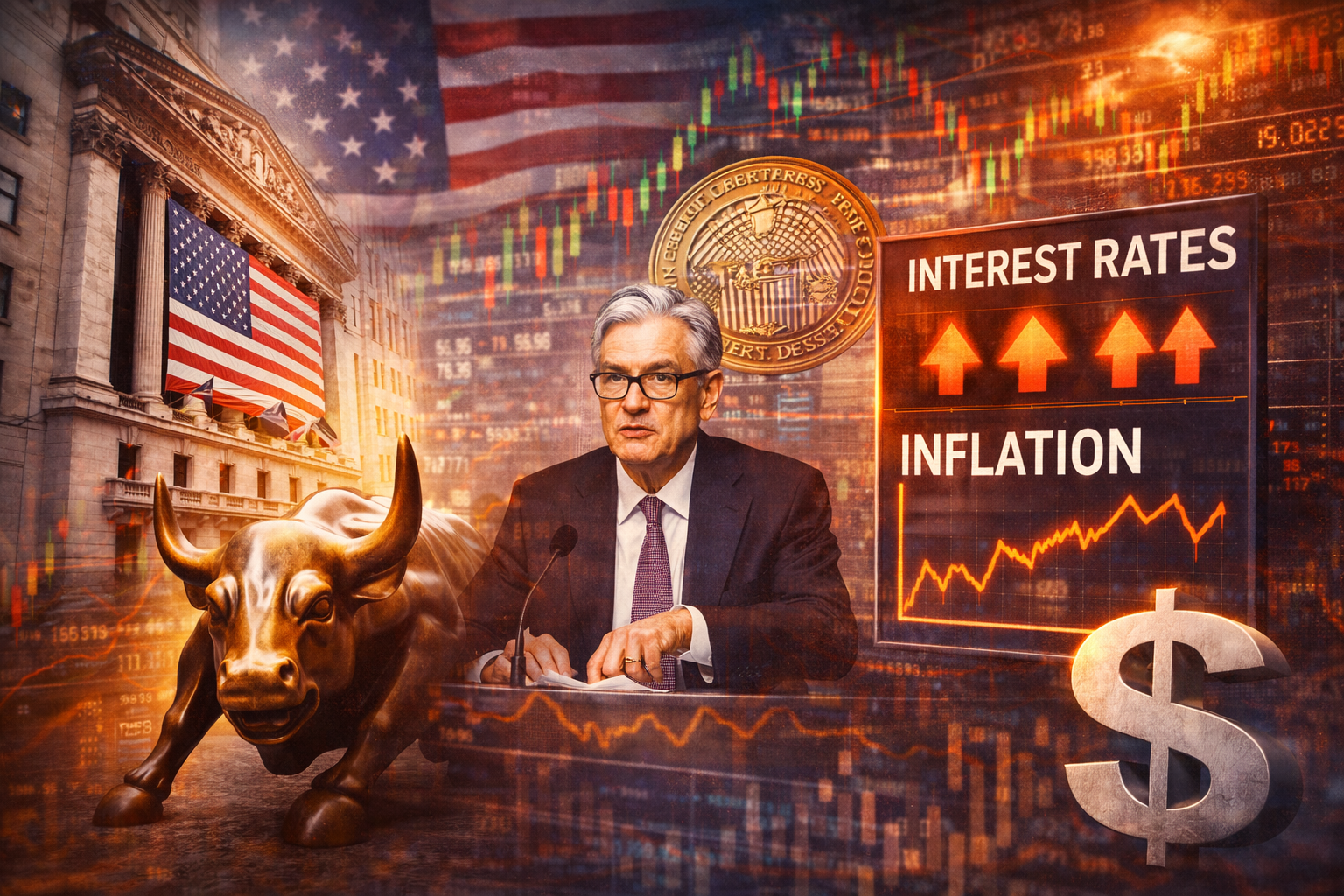
The Federal Reserve continues to play a central role in shaping market expectations. After an extended period of restrictive monetary policy aimed at curbing inflation, interest rates remain at elevated levels, reinforcing the Fed’s commitment to price stability.
While inflation has moderated compared to previous peaks, policymakers have signaled that rate cuts will only occur once inflation shows a clear and sustained path toward the target. This stance keeps borrowing costs high and influences everything from mortgage rates to corporate investment decisions.
📈 Stock Market Performance
US equity markets have shown mixed performance:
Technology and AI-driven companies continue to attract strong investor interest Interest-rate-sensitive sectors, such as real estate and utilities, face pressure Corporate earnings remain resilient but are increasingly scrutinized
The new York Stock Exchange reflects this cautious tone, with volatility driven by economic data releases and Fed communications.
💵 Dollar Strength and Global Impact
The US dollar remains a key reference point in global markets. Although it has lost some strength amid expectations of future rate cuts, it is still supported by relatively high US yields.
A strong or stable dollar affects:
Global capital flows Commodity prices Emerging market currencies
For international investors, US assets continue to offer relative safety and liquidity.
🏦 Impact on Consumers and Businesses
High interest rates have direct consequences for the real economy:
Consumers face higher credit card, auto loan, and mortgage rates Businesses experience increased financing costs, slowing expansion plans Savings and fixed-income investments become more attractive
This environment encourages cautious spending while rewarding conservative investment strategies.
🔮 What to Watch Going Forward
Key indicators to monitor in the coming months include:
Inflation and labor market data Federal Reserve policy statements Corporate earnings guidance Global geopolitical developments
Any significant shift in these factors could quickly reshape market expectations.
🧠 Conclusion
The US financial environment in 2026 is defined by discipline, data dependence, and cautious optimism. While economic growth remains intact, elevated interest rates continue to shape investment decisions and consumer behavior. For investors, staying informed and diversified is essential in navigating this complex but opportunity-rich landscape.
About The Author