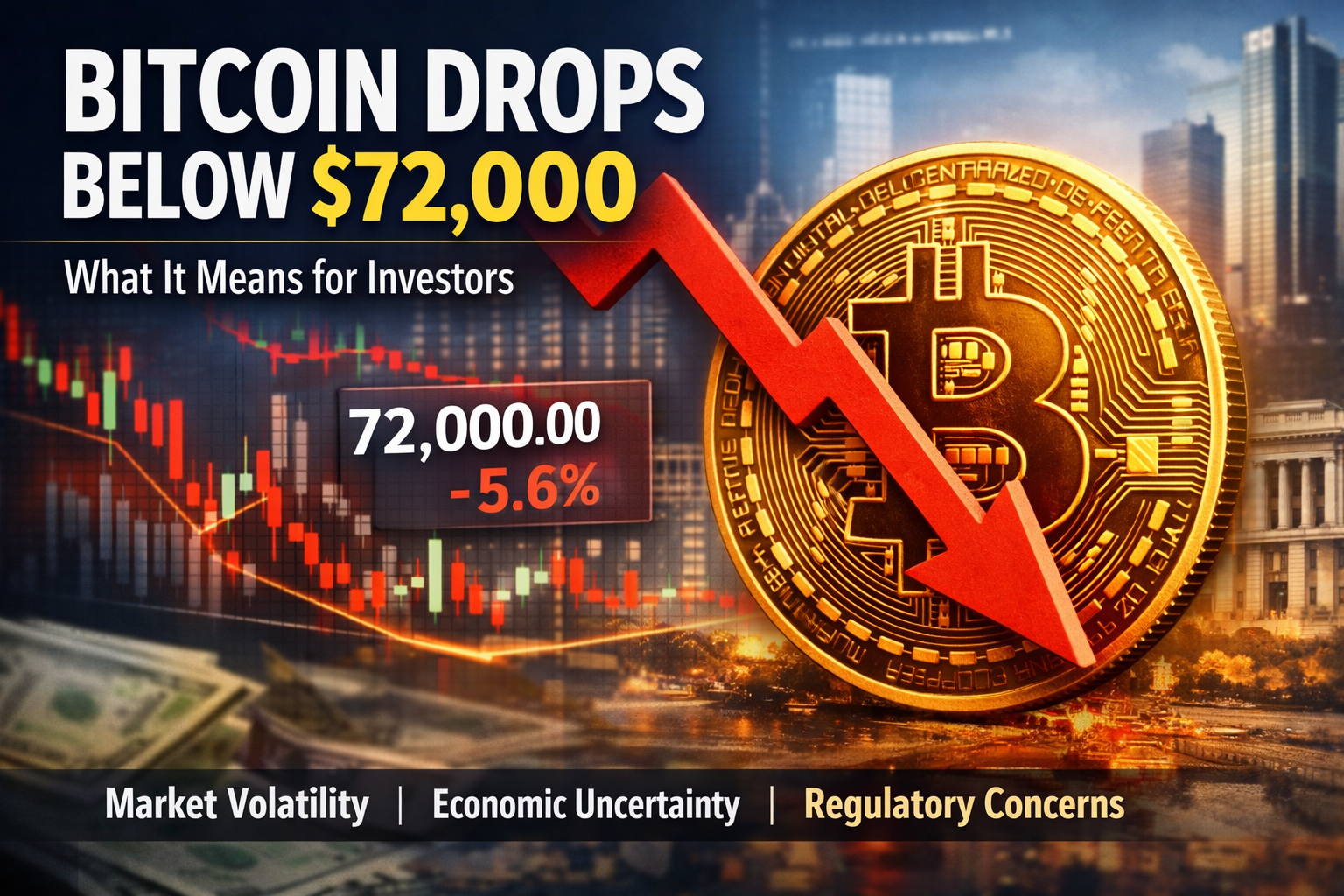

Bitcoin, the world’s largest cryptocurrency, has once again captured global attention—this time due to a sharp price decline. The recent Bitcoin drop has sparked intense debate among investors, analysts, and crypto enthusiasts. Is this just another temporary correction, or does it signal deeper issues in the cryptocurrency market?
Understanding the Bitcoin Price Drop
Bitcoin has always been known for its volatility. Large price swings—both upward and downward—are part of its DNA. However, when Bitcoin experiences a sudden drop, it often reflects a combination of macroeconomic pressures, market sentiment, and industry-specific events.
The current decline has wiped billions of dollars off the total crypto market capitalization, raising concerns about confidence in digital assets.
Key Reasons Behind Bitcoin’s Decline
1. Macroeconomic Pressure and Interest Rates
One of the biggest reasons behind Bitcoin’s recent drop is the global economic environment. Rising interest rates, inflation concerns, and tighter monetary policies have pushed investors toward lower-risk assets.
When central banks increase interest rates:
Liquidity decreases Risk assets like cryptocurrencies become less attractive Investors move capital into bonds, cash, or traditional markets
Bitcoin, despite being called “digital gold,” still behaves like a risk-on asset in times of economic uncertainty.
2. Regulatory Uncertainty in the Crypto Market
Regulation continues to be a major driver of Bitcoin price movements. Governments around the world are increasing scrutiny on:
Cryptocurrency exchanges Stablecoins Tax reporting Anti-money laundering (AML) compliance
Even rumors of stricter regulations can trigger fear and lead to massive sell-offs. Uncertainty often hurts markets more than bad news itself.
3. Institutional Investors Reducing Exposure
In recent years, institutional investors have played a key role in Bitcoin’s growth. However, when large funds and corporations start reducing exposure, the market reacts quickly.
Reasons institutions may sell Bitcoin include:
Portfolio rebalancing Risk management strategies Pressure from shareholders Regulatory compliance
Large sell orders can significantly impact price due to Bitcoin’s relatively limited liquidity compared to traditional markets.
4. Market Sentiment and Fear-Driven Selling
Crypto markets are highly emotional. When Bitcoin begins to fall:
Retail investors panic Stop-loss orders trigger automatically Social media amplifies fear
This creates a snowball effect, where selling feeds more selling. Fear, uncertainty, and doubt—often referred to as FUD—can dominate market psychology during these periods.
5. Technical Analysis and Key Support Levels
From a technical perspective, Bitcoin’s drop can also be explained by:
Breaking major support levels Bearish chart patterns Low trading volume during rebounds
Once a strong support level fails, traders often expect further downside, accelerating the decline.
How Bitcoin Drops Have Played Out Historically
Bitcoin has experienced multiple major crashes in the past—yet it has also shown an ability to recover and reach new all-time highs.
Historically:
Corrections of 20–40% are common Bear markets can last months or even years Long-term holders have often been rewarded
While history does not guarantee future performance, it provides important context for understanding Bitcoin’s behavior.
What This Bitcoin Drop Means for Investors
Short-Term Traders
For short-term traders, increased volatility means:
Higher risk More liquidation events Greater importance of risk management
Timing the market during a downturn is extremely difficult, even for professionals.
Long-Term Investors
Long-term investors often view Bitcoin drops as:
Accumulation opportunities A chance to lower average entry price A test of conviction and strategy
However, investing should always align with personal financial goals and risk tolerance.
Is This the End of Bitcoin?
Despite repeated claims over the years, Bitcoin has survived:
Multiple crashes Exchange failures Regulatory bans Media skepticism
The current drop does not necessarily mean the end of Bitcoin. Instead, it highlights the cyclical nature of the crypto market.
Bitcoin’s fundamentals—such as its fixed supply, decentralized network, and global accessibility—remain unchanged.
What to Watch Next
Investors and analysts are closely monitoring:
Inflation and interest rate decisions Regulatory announcements On-chain data and network activity Institutional buying or selling trends
These factors will play a critical role in determining Bitcoin’s next major move.
Final Thoughts
The recent Bitcoin drop is a reminder that cryptocurrency markets are volatile, complex, and deeply influenced by global economic forces. While the decline may feel alarming, it also reflects patterns seen many times before.
Whether this marks a temporary correction or a longer downturn, one thing is certain: Bitcoin continues to be one of the most closely watched assets in the world.
As always, informed decisions, proper risk management, and a long-term perspective are essential when navigating the ever-changing crypto landscape.
About The Author