
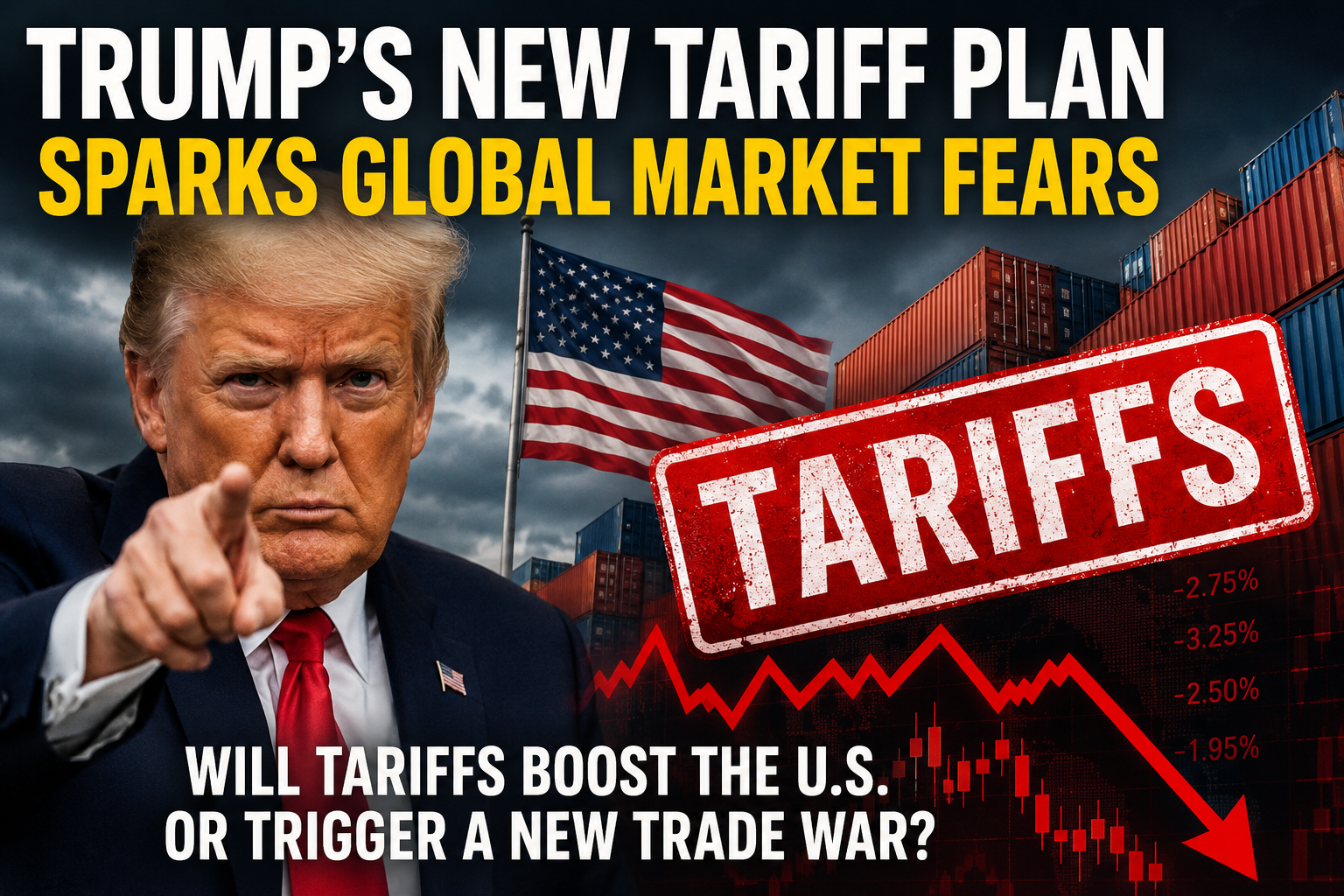
Investors Fear a New Trade War as Trump Pushes Massive Tariffs
Financial markets across the world are reacting strongly after new discussions surrounding Donald Trump’s aggressive tariff strategy in 2026. Investors, economists, and major corporations are warning that a new wave of import taxes could increase inflation, damage global trade, and create economic instability.
The proposed “tariff shock” is already becoming one of the hottest topics in finance, business, and politics.
What Is Trump’s New Tariff Plan?
Former President Donald Trump has proposed broad tariffs on imported products entering the United States. Reports suggest the plan could include:
- Universal tariffs on foreign goods
- Higher taxes on Chinese imports
- Stronger economic protection for American industries
- Pressure on international manufacturers
Trump argues that tariffs will protect U.S. jobs and reduce dependence on foreign countries, especially China.
However, many economists believe the strategy could trigger higher prices for consumers and increase inflation in the United States.
Why Wall Street Is Nervous
Wall Street investors fear that new tariffs could slow economic growth while making products more expensive. Companies that depend on global supply chains may face higher costs, lower profits, and weaker consumer demand.
Several sectors are already under pressure:
- Technology
- Automotive
- Retail
- Manufacturing
- Consumer electronics
Financial analysts warn that a large-scale tariff increase could create another global trade war similar to the tensions seen between the U.S. and China in previous years.
How Tariffs Could Affect Inflation
Tariffs work like taxes on imported goods. When companies pay more to import products, those extra costs are often passed to consumers.
That means Americans could see higher prices for:
- Smartphones
- Cars
- Clothing
- Food products
- Electronics
Some economists believe Trump’s tariff plan could delay future interest rate cuts by the Federal Reserve because inflation may remain elevated.
China and Global Markets React
China is closely monitoring the situation and could respond with countermeasures if new tariffs are implemented.
Global markets are also watching carefully because the U.S. remains the world’s largest economy. Any major trade disruption could affect:
- Oil prices
- Stock markets
- Cryptocurrency
- International shipping
- Emerging economies
Investors are increasingly searching for safe assets as uncertainty grows.
Could This Trigger a Recession?
Some analysts believe aggressive tariffs could weaken consumer spending and reduce business investments. If inflation rises while economic growth slows, the United States could face stagflation — one of the biggest fears on Wall Street.
Others argue the tariffs may strengthen domestic manufacturing and boost American production in the long term.
The debate continues, but one thing is clear: markets are paying close attention.
Trump’s proposed tariff strategy is quickly becoming one of the biggest financial stories of 2026. Whether the plan strengthens the American economy or creates new economic problems, investors around the world are preparing for volatility.
As trade tensions rise, Wall Street, businesses, and consumers are all waiting to see what happens next.
About The Author