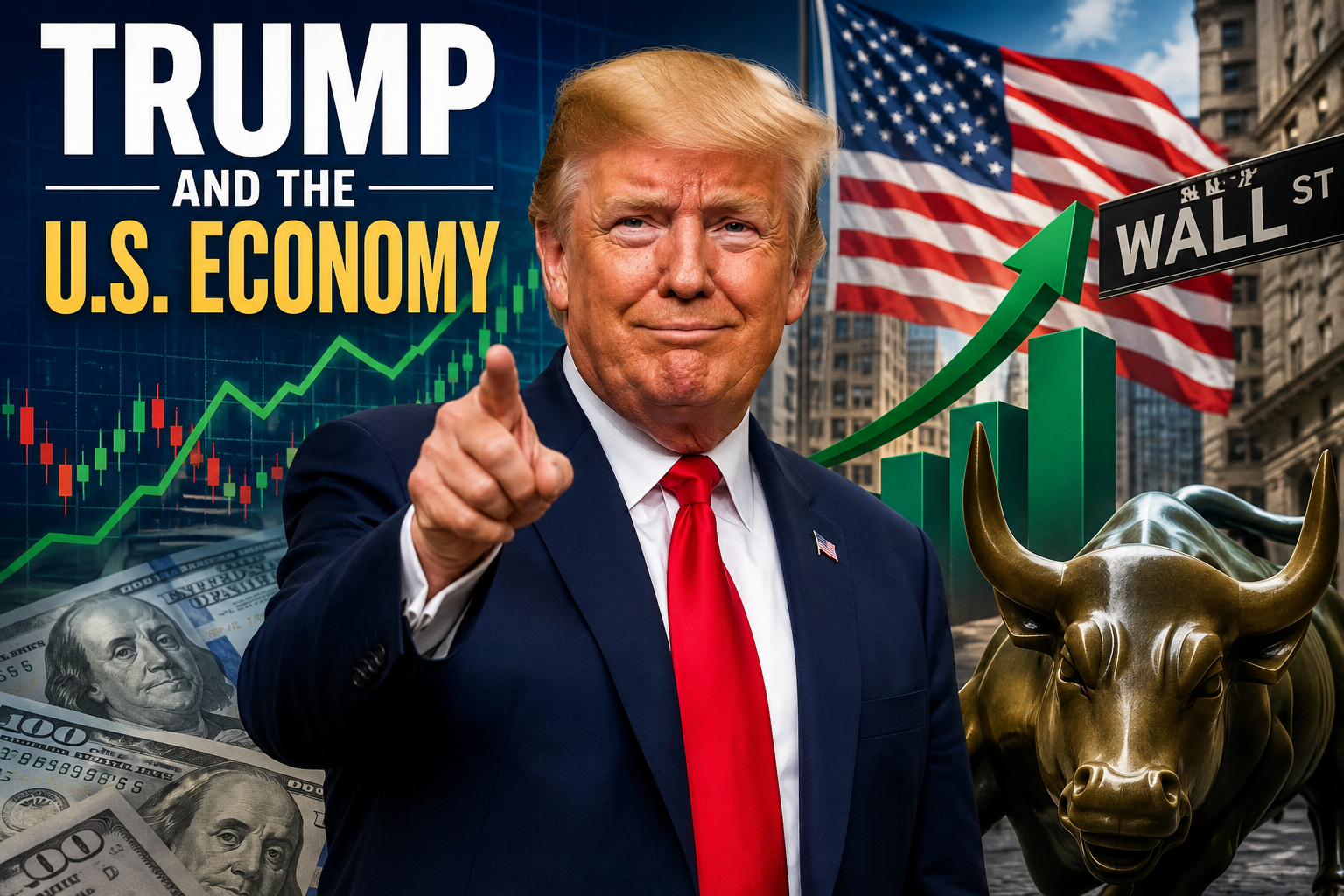
Donald Trump remains one of the most influential figures when it comes to the U.S. economy and global financial markets. Whether as a businessman or political leader, his decisions have consistently impacted Wall Street, the U.S. dollar, and international investment sentiment.
In this article, you will understand how Trump’s economic policies and approach influence financial markets and what that means for investors.
💼 Trump’s Economic Vision
Trump’s economic approach is often described as pro-business and growth-oriented. During his political leadership, he supported policies such as:
- Corporate tax cuts
- Economic deregulation
- Strengthening domestic industry
- Aggressive trade policies
The main goal behind these strategies is to stimulate economic growth and increase the competitiveness of American companies.
📊 Impact on Financial Markets
Financial markets react strongly to political decisions, and during Trump’s influence, volatility often increased.
📈 Stock Market (S&P 500 and Dow Jones)
During periods of positive economic announcements or tax cuts:
- Investor confidence increased
- Major companies experienced short-term growth
- Industrial and tech sectors reacted strongly
💵 U.S. Dollar
The U.S. dollar tends to react directly to fiscal and trade policies:
- Protectionist policies can strengthen the dollar
- Trade tensions often increase volatility
🏭 Most Affected Sectors
- Energy
- Industrial manufacturing
- Technology
- Defense
These sectors tend to react faster to political and economic shifts.
🌍 Trade Policy and Tariffs
One of the most notable aspects of Trump’s economic strategy was his aggressive trade policy, especially regarding China.
This resulted in:
- Increased global market volatility
- Supply chain restructuring
- Repricing of international assets
For investors, this created both risks and opportunities.
📉 Risks and Uncertainty
Despite pro-growth policies, there are also risks involved:
- Higher market volatility
- Political uncertainty
- Global trade tensions
- Pressure on emerging markets
📊 What Investors Can Learn
Regardless of political opinion, one clear fact stands out:
👉 Politics and financial markets are deeply connected.
Smart investors who follow political and economic changes can:
- Anticipate market movements
- Adjust investment strategies
- Reduce risk during volatile periods
Donald Trump continues to play a major role in shaping discussions around the U.S. economy. His policies and statements often influence financial markets, the dollar, and global investor sentiment.
For anyone interested in finance or investing, understanding these dynamics is essential for making better strategic decisions.
About The Author