
The Biggest World Cup in History Could Also Be the Most Profitable
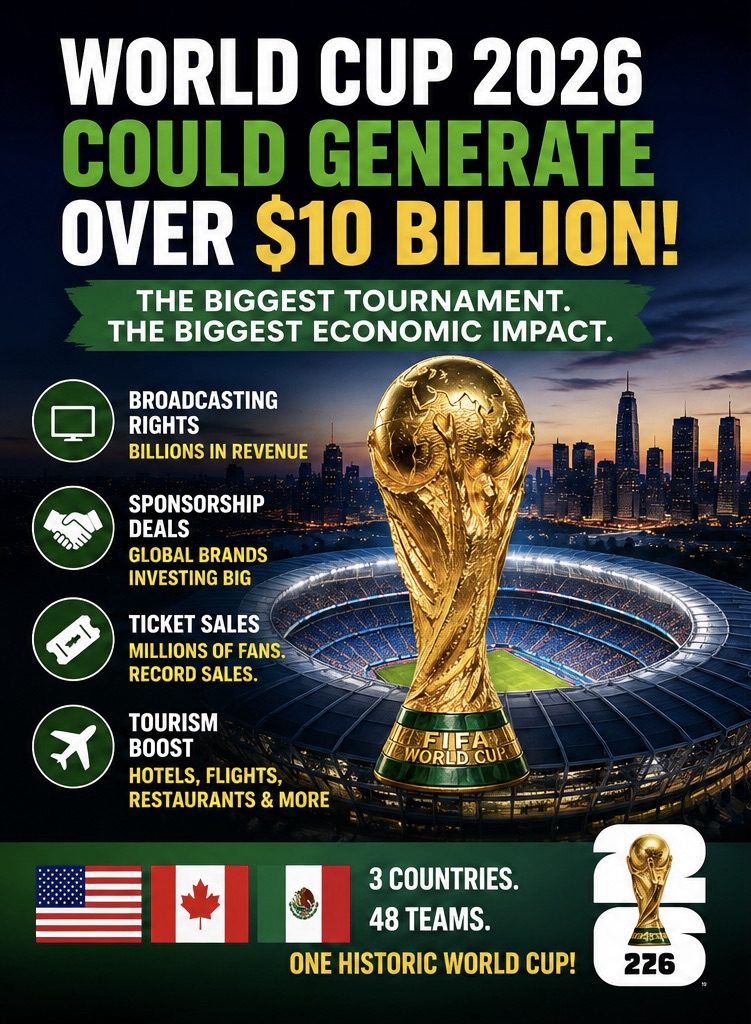
The FIFA World Cup 2026 is expected to break records both on and off the pitch. Hosted across the United States, Canada, and Mexico, the tournament will feature 48 national teams for the first time, making it the largest World Cup ever organized.
While football fans are excited about the expanded format, economists and investors are paying attention to something else: money.
Many analysts believe the tournament could generate more than $10 billion in economic activity, making it one of the most valuable sporting events ever held.
Why Is World Cup 2026 Expected to Be So Profitable?
Several factors make this tournament unique.
More Teams, More Matches
Previous World Cups featured 32 national teams. In 2026, that number increases to 48.
The expansion means:
- More matches
- More ticket sales
- More hotel bookings
- More tourism spending
- More sponsorship opportunities
Every additional game creates new revenue streams for FIFA, host cities, and local businesses.
Broadcasting Rights Continue to Grow
Television and streaming rights remain the largest source of revenue for FIFA.
Broadcasters around the world pay billions of dollars for the right to show World Cup matches because the tournament attracts one of the largest audiences in sports.
With global viewership expected to reach billions of people, media companies see the World Cup as one of the most valuable events available.
The Streaming Era
The growth of digital streaming platforms is creating even more opportunities.
Younger audiences increasingly consume sports through mobile devices and streaming services, opening new advertising and subscription revenue channels.
Sponsorship Deals Worth Billions
Global brands are willing to invest enormous amounts of money to associate themselves with the World Cup.
Companies from industries such as:
- Technology
- Finance
- Automotive
- Telecommunications
- Food and beverages
compete for visibility during the tournament.
For many corporations, the World Cup provides exposure to billions of potential customers worldwide.
Tourism Could See a Massive Boost
One of the biggest winners may be the tourism industry.
Millions of fans are expected to travel across North America during the competition.
Tourists spend money on:
- Hotels
- Flights
- Restaurants
- Transportation
- Entertainment
- Shopping
This creates a powerful economic ripple effect throughout host cities.
Host Cities Are Preparing for an Economic Boom
Cities selected to host matches are already preparing for increased demand.
Local governments and businesses expect benefits such as:
Increased Visitor Spending
Visitors often stay several days before and after matches, boosting local economies.
Job Creation
Temporary jobs are created in hospitality, security, transportation, event management, and tourism services.
Infrastructure Improvements
Many host regions invest in transportation and public facilities that continue benefiting residents long after the tournament ends.
FIFA’s Revenue Machine
The World Cup is FIFA’s most important source of income.
Revenue typically comes from:
Media Rights
Broadcasting agreements account for a significant share of total revenue.
Marketing Rights
Corporate sponsorships and partnerships generate billions of dollars.
Ticket Sales
Millions of tickets are expected to be sold throughout the tournament.
Licensing
Official merchandise, video games, collectibles, and branded products add another major revenue stream.
The Impact on Local Businesses
Small and medium-sized businesses may also benefit.
Restaurants, bars, souvenir shops, transportation providers, and entertainment venues often experience substantial increases in customer traffic during major sporting events.
Many business owners view the World Cup as a once-in-a-generation opportunity.
Could World Cup 2026 Break Every Financial Record?
Many experts believe so.
The combination of:
- 48 national teams
- Three host countries
- Expanded global audiences
- Growing streaming revenues
- Record tourism demand
creates conditions for unprecedented financial results.
If projections prove accurate, World Cup 2026 could become the most profitable tournament in FIFA history.
What This Means for Investors
Investors are closely watching industries likely to benefit from the tournament, including:
- Travel companies
- Airlines
- Hotel chains
- Sports apparel brands
- Entertainment businesses
- Media companies
Major international sporting events often create opportunities for businesses positioned to capture increased consumer spending.
World Cup 2026 is much more than a football tournament.
It represents a global economic event capable of generating over $10 billion in activity across multiple industries. From tourism and broadcasting to sponsorships and local businesses, the financial impact could be felt long after the final whistle.
As the countdown continues, the tournament is already shaping up to be one of the most important sporting and economic events of the decade.
About The Author