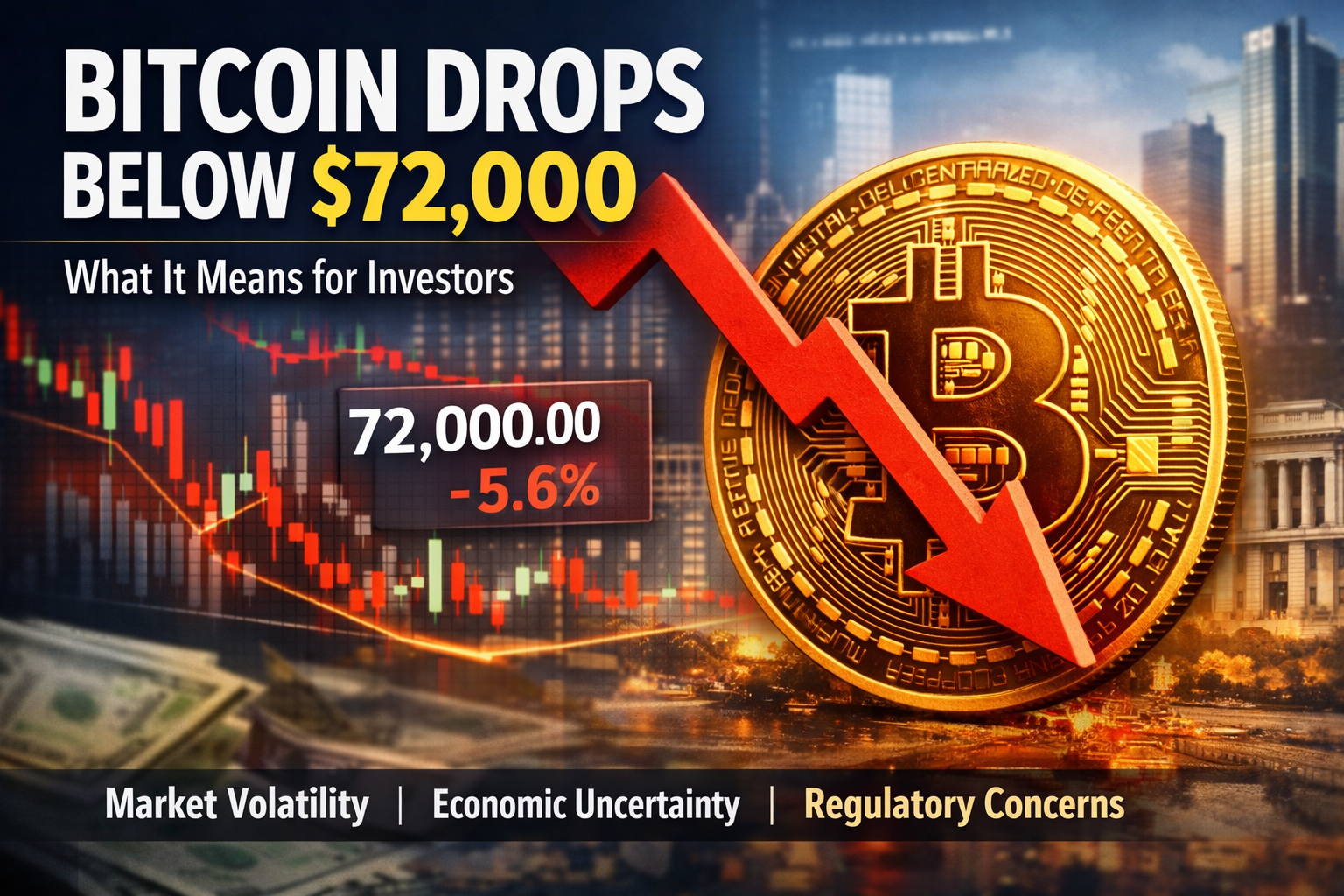
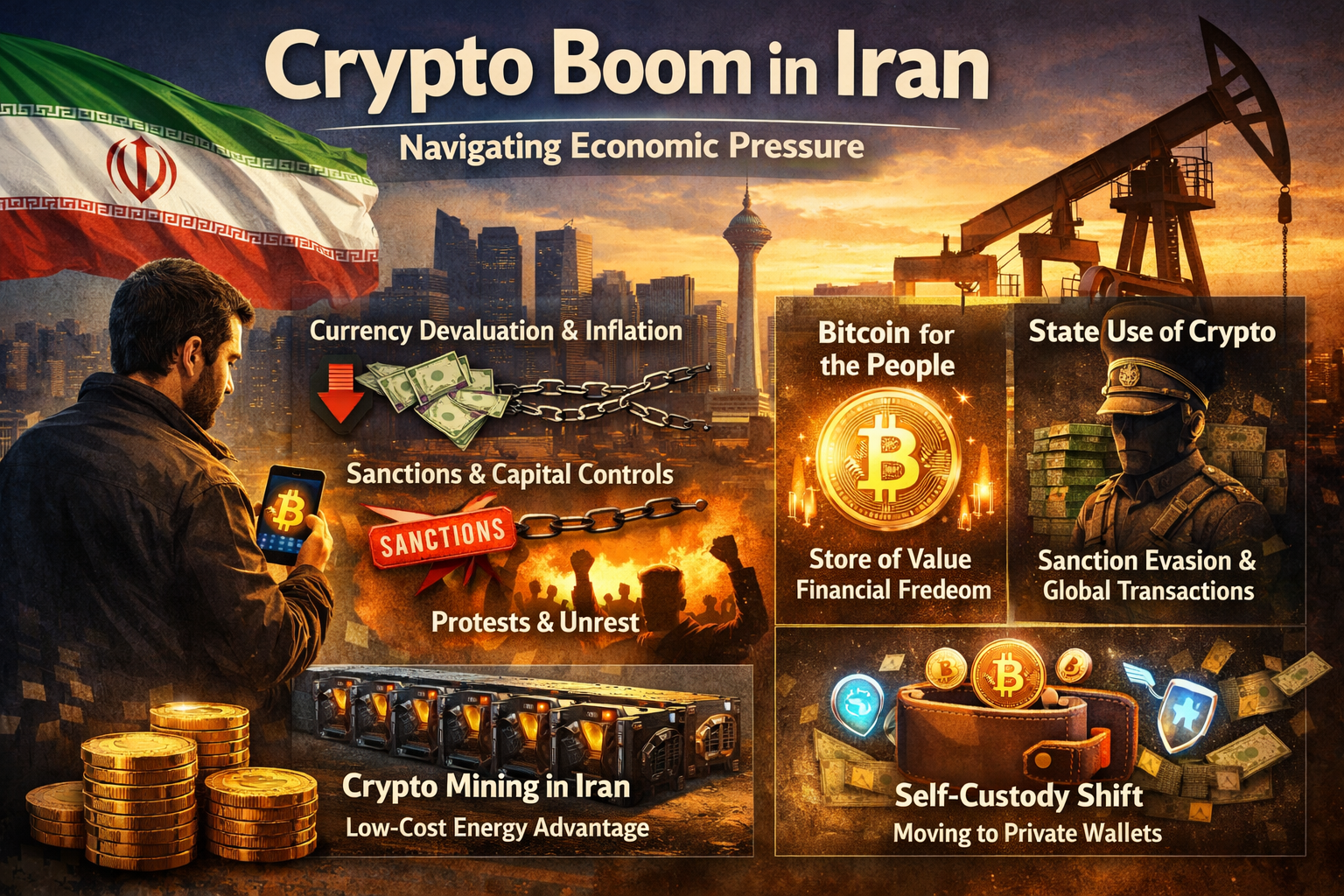
The use of cryptocurrencies in Iran has grown sharply in recent years, turning the country into one of the most notable real-world cases of crypto adoption driven by economic necessity rather than speculation.
Why Crypto Is Growing in Iran
Iran has faced years of severe economic pressure due to international sanctions, high inflation, and the continuous devaluation of its national currency, the rial. Since 2018, the rial has lost a significant portion of its purchasing power, pushing citizens to look for alternatives to protect their savings.
Cryptocurrencies — especially Bitcoin — have emerged as a practical solution. Unlike traditional financial systems, crypto operates outside government control, allowing individuals to store value, transfer money, and access global markets without relying on local banks.
Inflation, Sanctions, and Capital Controls
Strict capital controls and limited access to foreign currencies have made it difficult for Iranians to preserve wealth or move money across borders. Cryptocurrencies offer a way around these barriers, enabling peer-to-peer transactions and financial autonomy.
During periods of heightened social unrest and economic instability, on-chain data has shown spikes in crypto activity, particularly withdrawals from centralized exchanges into personal wallets. This behavior suggests a growing preference for self-custody and financial sovereignty.
Bitcoin as a Store of Value
For many Iranians, Bitcoin is not viewed as a high-risk speculative asset but rather as a long-term store of value — similar to digital gold. Its fixed supply and resistance to censorship make it attractive in an environment where trust in local currency and institutions is low.
Mining and Infrastructure
Iran has also played a role in global crypto mining, largely due to historically low energy costs. Although the government has imposed restrictions and temporary bans on mining at times, the sector remains active and contributes to the country’s crypto ecosystem.
A Complex Landscape
While crypto adoption among ordinary citizens continues to rise, reports indicate that state-linked entities may also be using cryptocurrencies to bypass sanctions and facilitate international transactions. This dual use highlights the complexity of crypto’s role in sanctioned economies.
Final Thoughts
The surge in crypto usage in Iran is a powerful example of how decentralized finance can grow under economic stress. It shows that cryptocurrencies are not only tools for investment but also instruments of financial survival in regions facing inflation, sanctions, and restricted access to the global financial system.
As global uncertainty increases, Iran’s experience may offer insight into how crypto adoption could evolve in other economically pressured nations.
About The Author