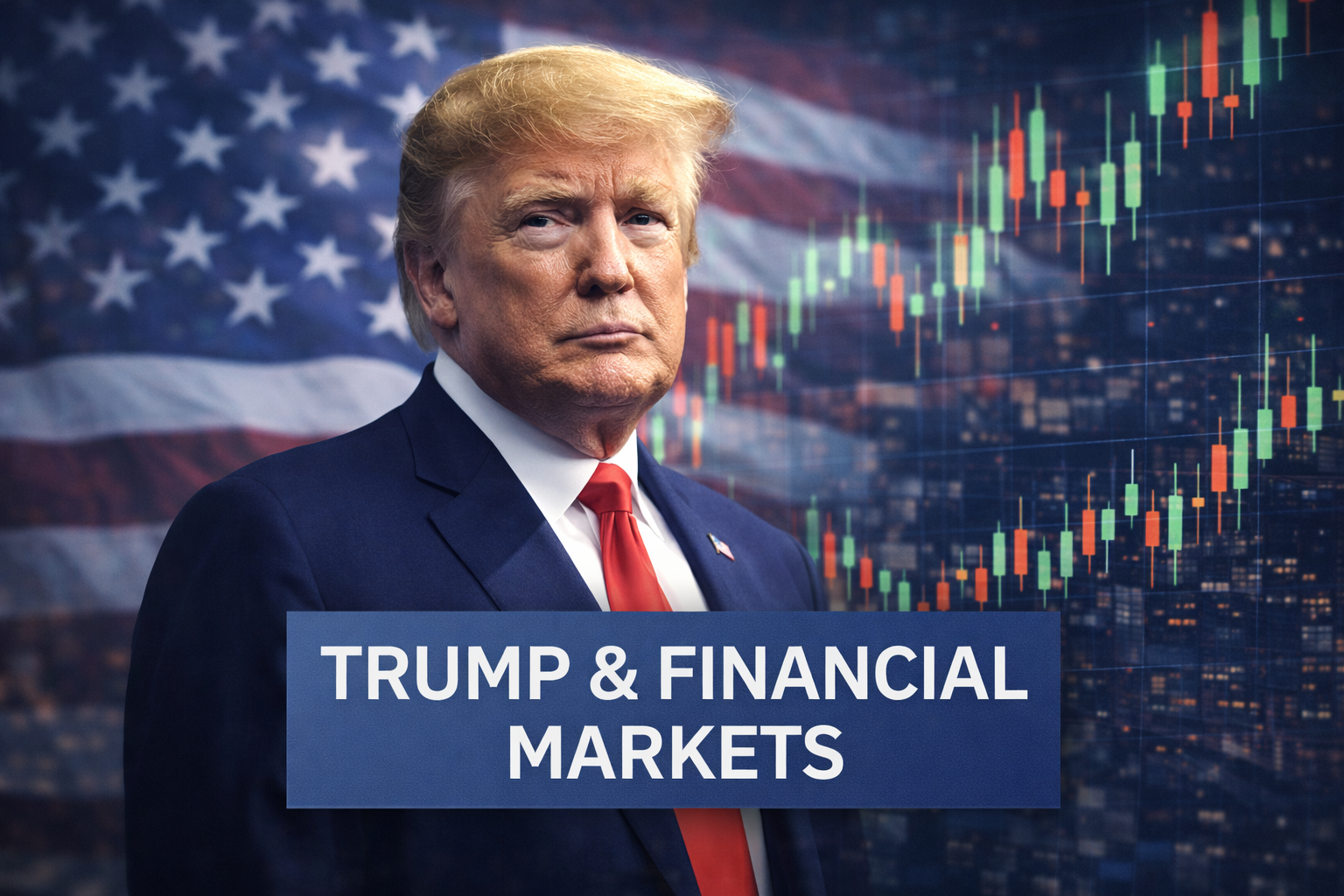
Few political figures have influenced financial markets as directly as Donald Trump. Whether through policy decisions, public statements, or market expectations, Trump’s presence continues to shape investor sentiment in the United States and globally.
For investors, Trump is not just a political figure — he is a market-moving variable.
Trump’s Pro-Business Narrative
Throughout his political career, Trump positioned himself as a pro-business and pro-market leader, emphasizing:
Corporate tax cuts Deregulation Domestic manufacturing incentives A strong stock market as a measure of success
This narrative resonated strongly with equity investors, particularly during his presidency, when markets often reacted positively to announcements aligned with business growth.
Stock Market Reactions to Trump-Related News
Financial markets have repeatedly shown sensitivity to Trump-related developments, including:
Election cycles and polling data Trade policy announcements Public comments on interest rates, the Federal Reserve, and inflation
Historically, sectors such as energy, defense, banking, and infrastructure tend to show heightened volatility when Trump’s political influence increases.
Trump, Inflation, and Interest Rates
Trump has been openly critical of high interest rates and restrictive monetary policy. From an investor perspective, this stance matters because:
Lower rates generally support equity valuations Credit expansion benefits real estate and consumer-driven sectors Risk assets often perform better under accommodative policy expectations
Even without direct control over the Federal Reserve, Trump’s rhetoric influences market expectations, which are a powerful force in asset pricing.
Risk-On vs. Risk-Off Sentiment
When markets associate Trump with:
Economic growth Lower regulation Business-friendly leadership
Investor sentiment often shifts toward risk-on behavior, benefiting stocks, cryptocurrencies, and speculative assets.
Conversely, uncertainty around trade wars or geopolitical tensions can trigger short-term volatility, reinforcing the importance of risk management.
Why Investors Still Track Trump Closely
For investors, ignoring Trump is not an option. His influence affects:
Market psychology Policy expectations Sector rotation Volatility premiums
In modern markets, politics and finance are deeply interconnected, and Trump remains one of the most relevant political variables for capital allocation decisions.
Conclusion
Donald Trump’s relationship with financial markets highlights a broader truth: markets trade expectations, not just data. Regardless of political views, investors must understand how influential figures shape sentiment, policy outlooks, and capital flows.
For those focused on investing, Trump is less about ideology — and more about market impact.
About The Author