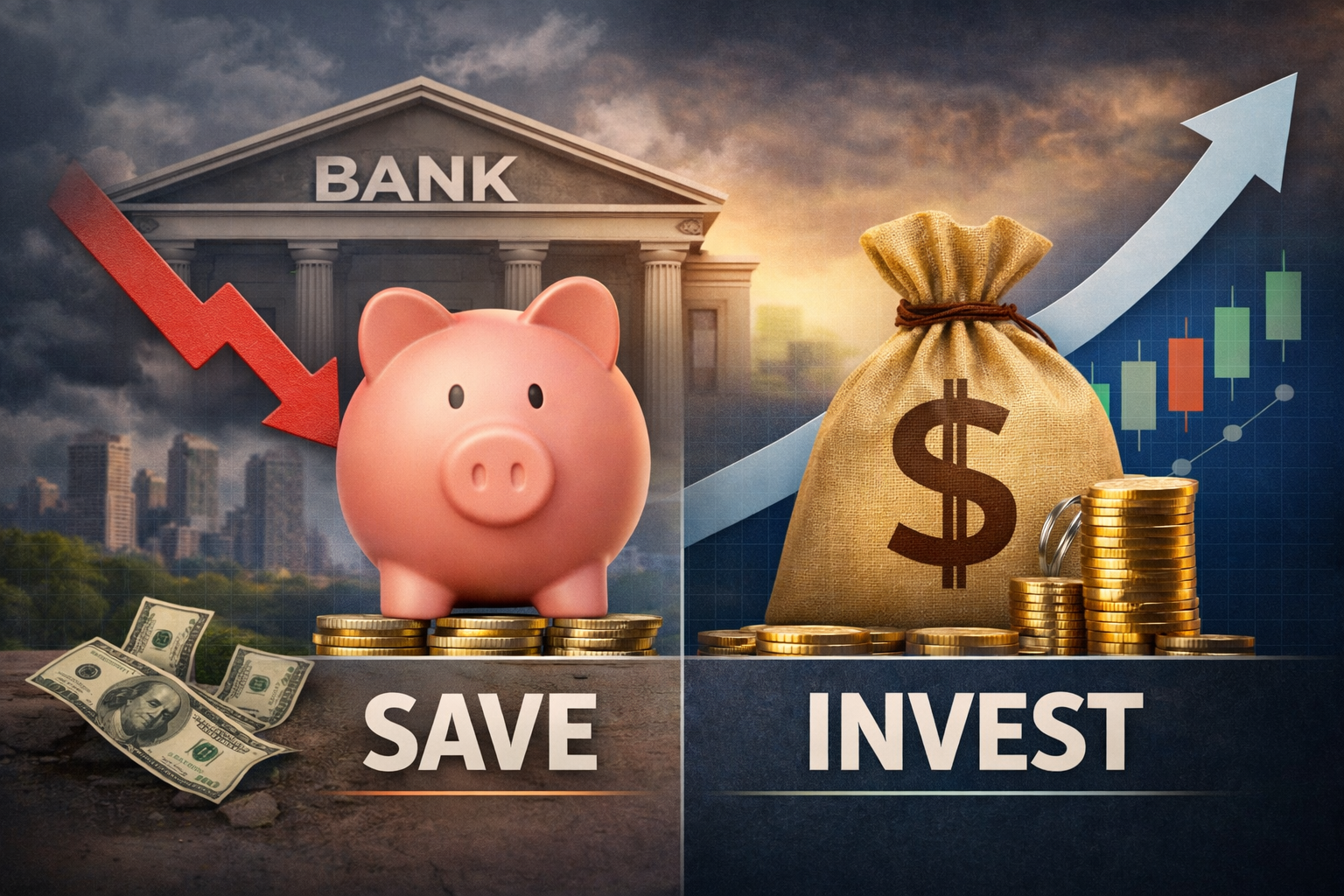
Many people struggle to understand the difference between saving and investing. While both are important, they serve very different financial purposes.
What Saving Really Does
Saving prioritizes safety. Money placed in savings accounts is:
Easily accessible Low risk Protected from market volatility
This makes saving ideal for:
Emergency funds Short-term expenses Planned purchases
However, safety often comes at the cost of low returns.
What Investing Actually Does
Investing focuses on growth. When you invest, your money is used to:
Fund businesses Finance governments Participate in economic expansion
Common investment vehicles include:
Stocks Bonds Index funds Real estate
Over long periods, these assets have historically produced returns well above inflation.
Understanding Risk and Time
Risk is often misunderstood. While investing does involve volatility, risk decreases over time. Long-term investors benefit from:
Market recovery cycles Compound returns Diversification
Saving is low risk in the short term, but risky in the long term due to inflation.
When Saving Is Better
Saving is preferable when:
You need liquidity Your goal is short-term You cannot tolerate fluctuations
When Investing Is Better
Investing is usually better when:
Your goal is long-term You want to grow purchasing power You can stay invested through market cycles
The Smart Strategy
Most financial experts recommend a balance:
Save for stability Invest for growth
Conclusion
Investing is generally better than saving for building wealth over time, but both are necessary. Financial success comes from knowing when to use each tool.
About The Author