The United States remains the backbone of the global financial system.
When tensions rise internally — politically, economically, or socially — the entire world feels it.
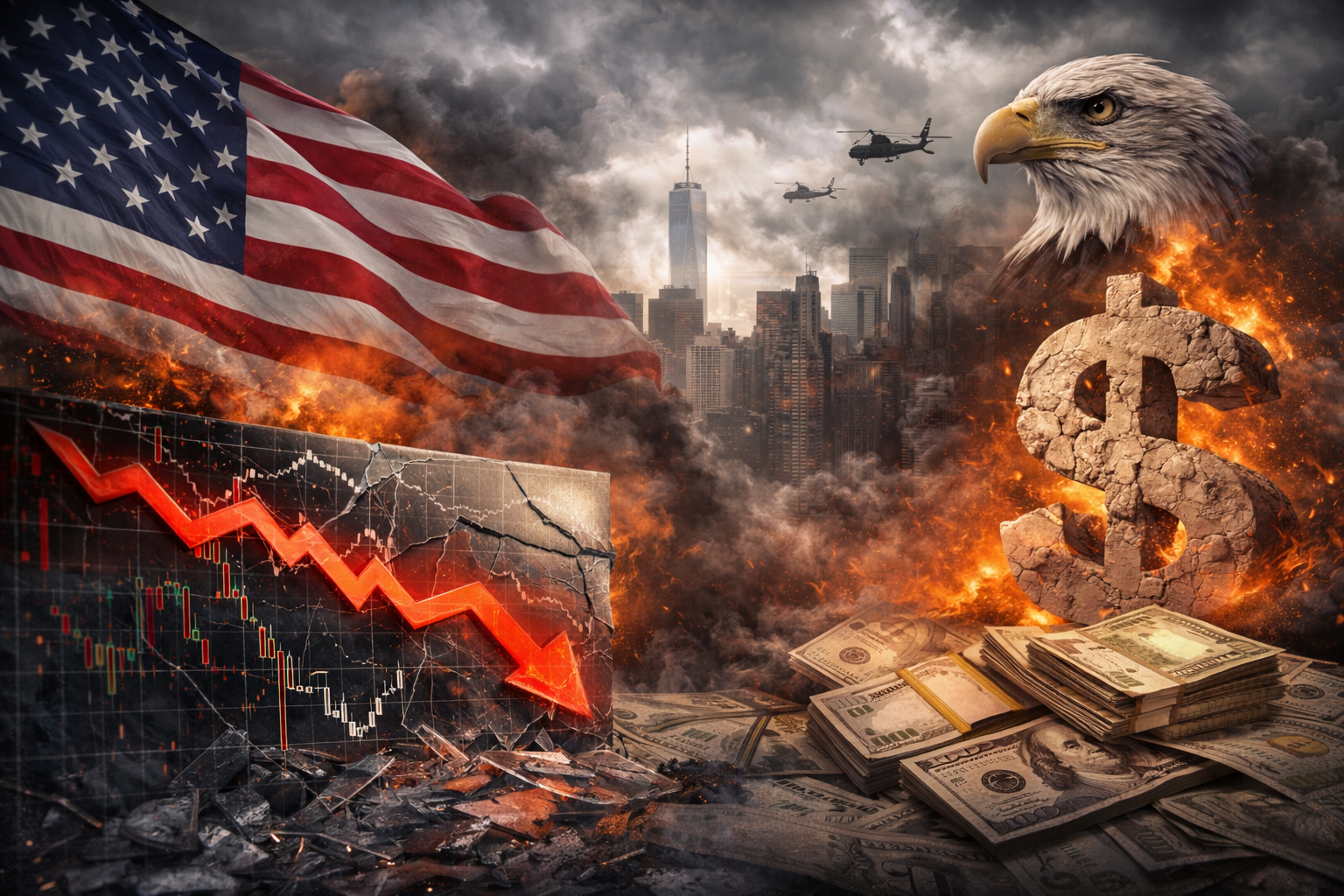
Right now, warning signs are flashing.
What Are the Current Tensions in the U.S.?
The U.S. is facing multiple layers of stress at the same time:
Political polarization at historic levels High interest rates pressuring households and businesses Growing public debt and fiscal uncertainty Banking sector still fragile after recent failures Geopolitical pressure and global conflicts
Individually, these issues are manageable.
Together, they form a systemic risk environment.
Financial Markets Are Pricing in Uncertainty
Markets hate one thing above all else: uncertainty.
Investors are becoming more defensive:
Reduced exposure to risk assets Increased demand for short-term Treasuries Stronger dollar in stress moments Higher volatility across equities and crypto
This signals lack of confidence in long-term stability.
Interest Rates: The Silent Pressure
High rates are doing their job — slowing the economy — but at a cost:
Consumer credit is tightening Small businesses face refinancing risk Commercial real estate remains vulnerable Government debt servicing is exploding
The question is no longer “Can the U.S. grow?”
It’s becoming “How much stress can the system absorb?”
Why the Rest of the World Should Care
The U.S. dollar is the global reserve currency.
When America sneezes:
Emerging markets catch a cold Capital flows reverse Local currencies weaken Inflation pressure returns abroad
No major economy is insulated from U.S. instability.
Is This a Crisis or a Transition?
Not every period of tension ends in collapse.
This moment looks more like:
A long adjustment cycle A shift toward slower growth Tighter financial conditions Reduced appetite for excess risk
But history shows that transitions are when accidents happen.
What Smart Investors Are Watching
Instead of headlines, serious investors focus on:
Treasury yield movements Credit spreads Banking liquidity signals Federal Reserve communication Geopolitical escalation risks
These indicators tell the real story — not social media noise.
Final Thoughts
The United States is not “about to collapse.”
But it is under pressure.
And when the world’s largest economy operates under stress,
prudence beats optimism.
Periods like this reward:
Liquidity Diversification Patience
Excess confidence is usually punished.
About The Author