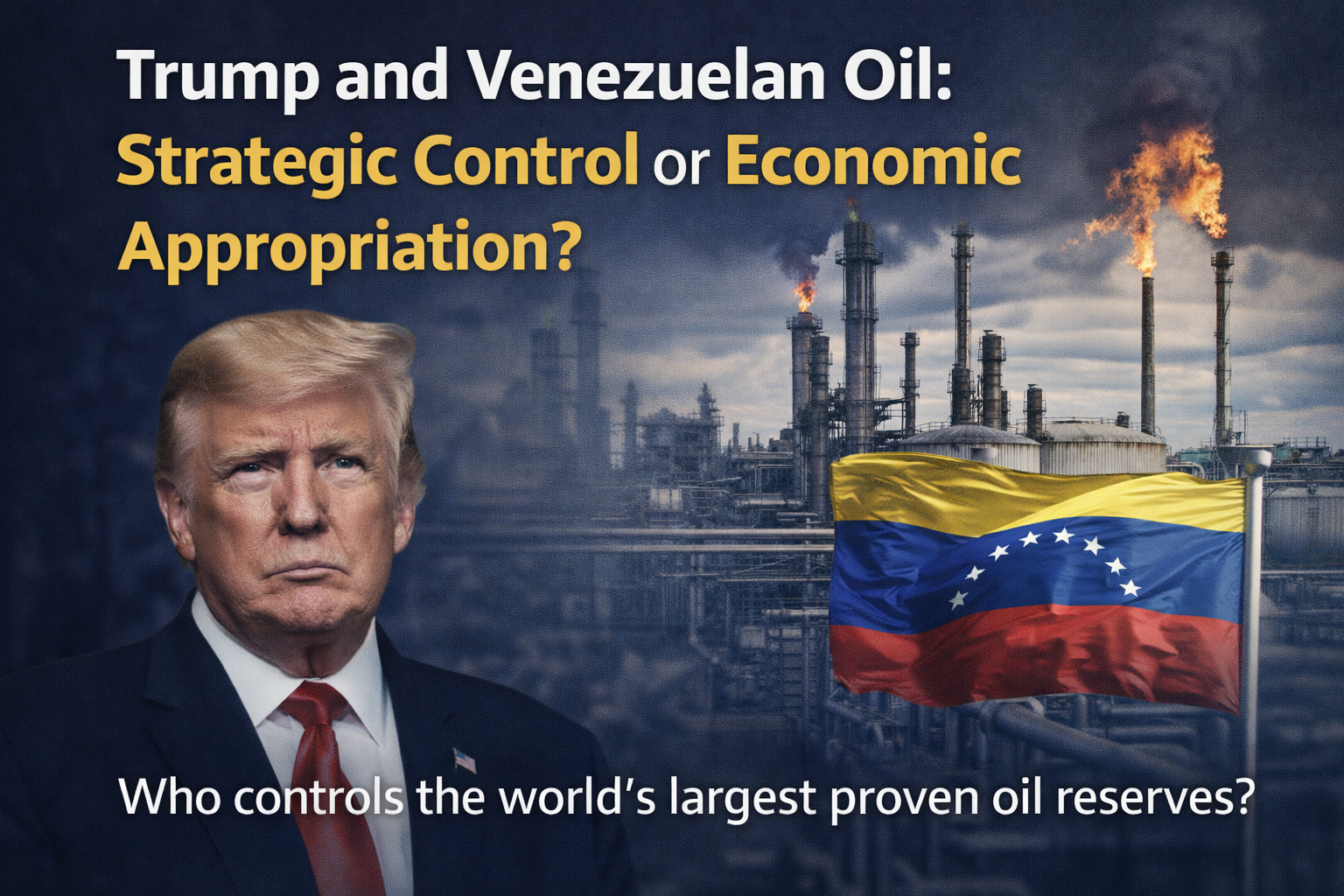
Recent statements and political moves linked to Donald Trump have reignited a global debate around Venezuela’s oil reserves — one of the largest in the world.
From an economic perspective, this discussion goes far beyond ideology or politics.
It is about energy security, market control, and global power.
🛢️ Why Venezuelan oil matters so much
Venezuela holds some of the world’s largest proven oil reserves, particularly heavy crude, which is critical for:
global energy supply price stability in oil markets strategic reserves of major economies
Even as a top oil producer, the United States still relies on specific types of crude that Venezuelan oil can provide.
📌 In energy markets, access often matters more than ownership.
🌍 Oil geopolitics: influence over possession
Historically, global powers rarely “seize” natural resources outright.
Instead, they tend to:
shape political outcomes influence governments and sanctions control contracts, logistics, and trade routes decide who can sell — and to whom
In economic terms, control is exercised through policy, not force.
📉 Economic impact on Venezuela
If external powers gain influence over Venezuela’s oil sector, possible outcomes include:
restructuring of oil contracts foreign companies returning to operations changes in export destinations partial relief or redesign of sanctions
However, without institutional stability, economic recovery remains fragile.
📈 Global market effects
Any shift involving Venezuelan oil can affect:
global oil prices inflation expectations energy-dependent economies geopolitical risk premiums
Markets react not only to supply, but to predictability and legitimacy.
⚠️ Strategic risk: control without reconstruction
Economic history shows that controlling resources alone does not rebuild economies.
Without:
credible institutions legal security transparent governance
oil wealth often deepens inequality instead of creating growth.
🧠 Conclusion
The real question is not whether oil is being taken —
but who controls the rules of the game.
In the global economy, power is exercised through contracts, markets, and influence, not simply through barrels of oil.
About The Author