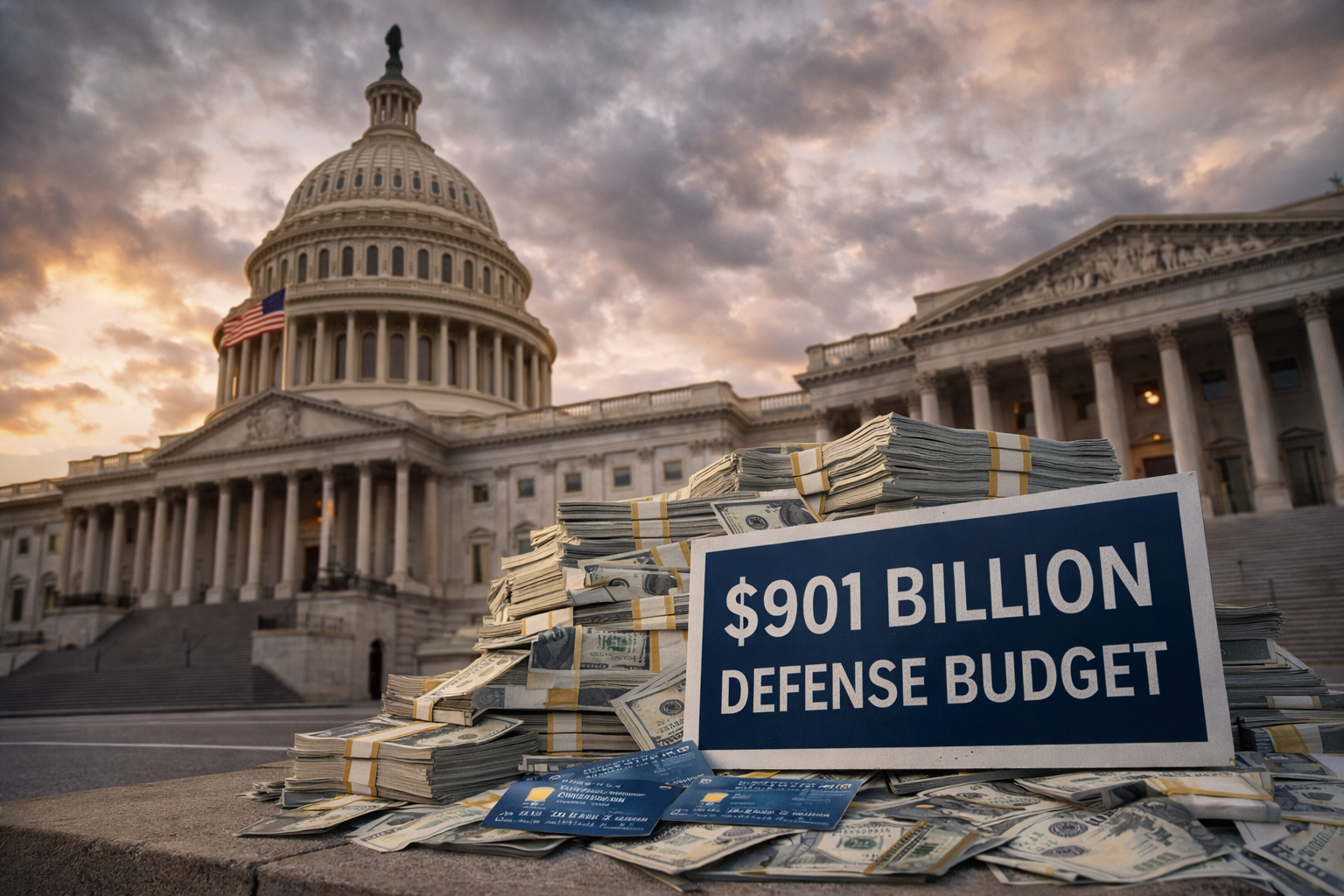
The U.S. Congress has approved a massive $901 billion defense budget, marking one of the largest military spending packages in American history.
The bill passed with bipartisan support and will fund the Department of Defense for the upcoming fiscal year, covering military salaries, weapons programs, cybersecurity, and foreign assistance.
What Does the $901 Billion Budget Include?
The defense package allocates funds to several key areas:
Pay raises for U.S. military personnel Investments in advanced weapons systems Expanded cybersecurity and intelligence operations Continued military support for allies, including Ukraine Increased spending to counter geopolitical threats from China and Russia
Lawmakers argue the budget is necessary to maintain U.S. global military dominance.
Why Is the Budget So Large?
Rising global tensions and prolonged conflicts have pushed defense spending higher.
According to U.S. officials, the budget reflects:
Ongoing war-related commitments Growing competition with China Increased costs of modern warfare and technology Inflation-driven increases in military expenses
Defense spending has steadily climbed over the past decade.
Critics Warn About Rising Debt
Despite broad approval, the budget has drawn criticism.
Some lawmakers and economists warn that:
U.S. national debt continues to grow Military spending is rising faster than social investments High defense costs limit funding for healthcare, education, and infrastructure
With interest rates still elevated, servicing government debt has become more expensive.
Market and Economic Impact
Large defense budgets often benefit:
Defense contractors Technology and cybersecurity firms Aerospace and weapons manufacturers
At the same time, increased government spending may add pressure to federal deficits, influencing long-term fiscal policy debates.
Final Thoughts
The approval of the $901 billion defense budget highlights Washington’s priorities amid global uncertainty.
While supporters see it as essential for national security, critics argue it underscores the difficult trade-offs facing the U.S. economy.
As fiscal pressures mount, defense spending will remain at the center of political and economic discussions.
About The Author