
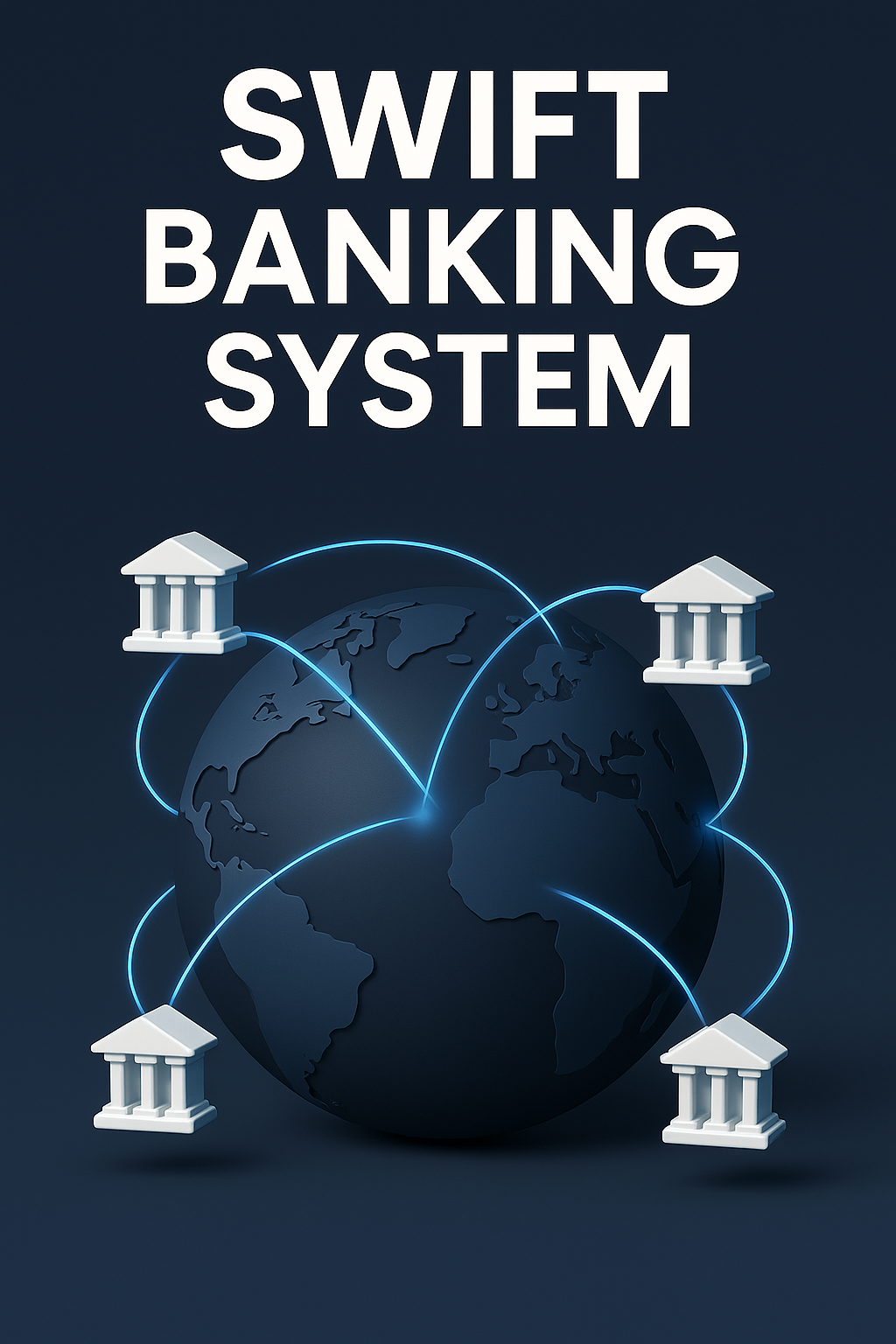
In a world increasingly driven by digital payments, cryptocurrency innovation, and instant transactions, one network remains at the center of global finance: the SWIFT system.
Despite being created in the 1970s, SWIFT continues to dominate international bank transfers in 2025 — powering trillions of dollars in daily transactions across more than 200 countries.
But what exactly is SWIFT, how does it work, and why has no system replaced it yet?
This article breaks down everything investors and consumers need to know.
1. What Is SWIFT?
SWIFT stands for Society for Worldwide Interbank Financial Telecommunication.
It is not a bank, nor does it hold money.
Instead, it is a secure messaging network that allows financial institutions to:
send payment instructions settle international transfers authenticate transactions communicate securely
More than 11,000 institutions — including banks, governments, brokers, and exchanges — rely on SWIFT.
2. How Does SWIFT Work?
When you send money internationally, your bank usually communicates through SWIFT.
Here’s how the process works:
Your bank sends a SWIFT message to the receiving bank. That message contains all instructions needed to move the funds. The transfer is executed through correspondent banks if the institutions do not have a direct relationship. The receiving bank credits the final customer.
Think of SWIFT as a universal financial language — a standardized method of telling banks what to do.
3. Why SWIFT Still Dominates Cross-Border Payments
✔ 3.1. Global Adoption
Every major bank in the world already uses SWIFT.
This network effect means switching to another system would be extremely costly and slow.
✔ 3.2. Security
SWIFT’s encrypted communication structure has proven extremely reliable for decades.
Anti-fraud monitoring Strong authentication End-to-end encryption
These features make institutions trust SWIFT more than alternative networks.
✔ 3.3. Standardization
SWIFT messages follow strict global formats, reducing errors and delays in international payments.
✔ 3.4. Integration With Traditional Finance
Most countries’ central banks and large financial institutions are deeply integrated with SWIFT.
Replacing it would require massive regulatory restructuring.
4. Limitations of the SWIFT System
Despite its dominance, SWIFT is not perfect.
⛔ Slow processing
Transfers may take 1–5 business days depending on:
correspondent banks time zone differences compliance checks
⛔ High costs
International transfers often include:
SWIFT fees intermediary bank fees exchange rate spreads
⛔ Competition from new technologies
Blockchain-based systems like Ripple (XRP), USD stablecoin rails, and even emerging CBDCs offer faster, cheaper alternatives — but lack global adoption.
5. Could SWIFT Lose Its Dominance?
Not in the short term.
While alternatives exist, none currently match SWIFT’s combination of:
global reach security compliance framework institutional trust
Instead of being replaced, SWIFT is evolving.
The network is adopting ISO 20022 — a richer messaging format that improves transparency, speed, and automation.
With modernization underway, SWIFT is positioned to remain the backbone of global payments for years.
📌 Conclusion
SWIFT remains the world’s dominant cross-border payment network because of its unrivaled adoption, security, and integration with global financial institutions.
Although faster technologies are emerging, no system currently matches SWIFT’s reach or reliability.
For banks, businesses, and investors, understanding SWIFT is essential — it is the silent infrastructure powering the global economy.
About The Author