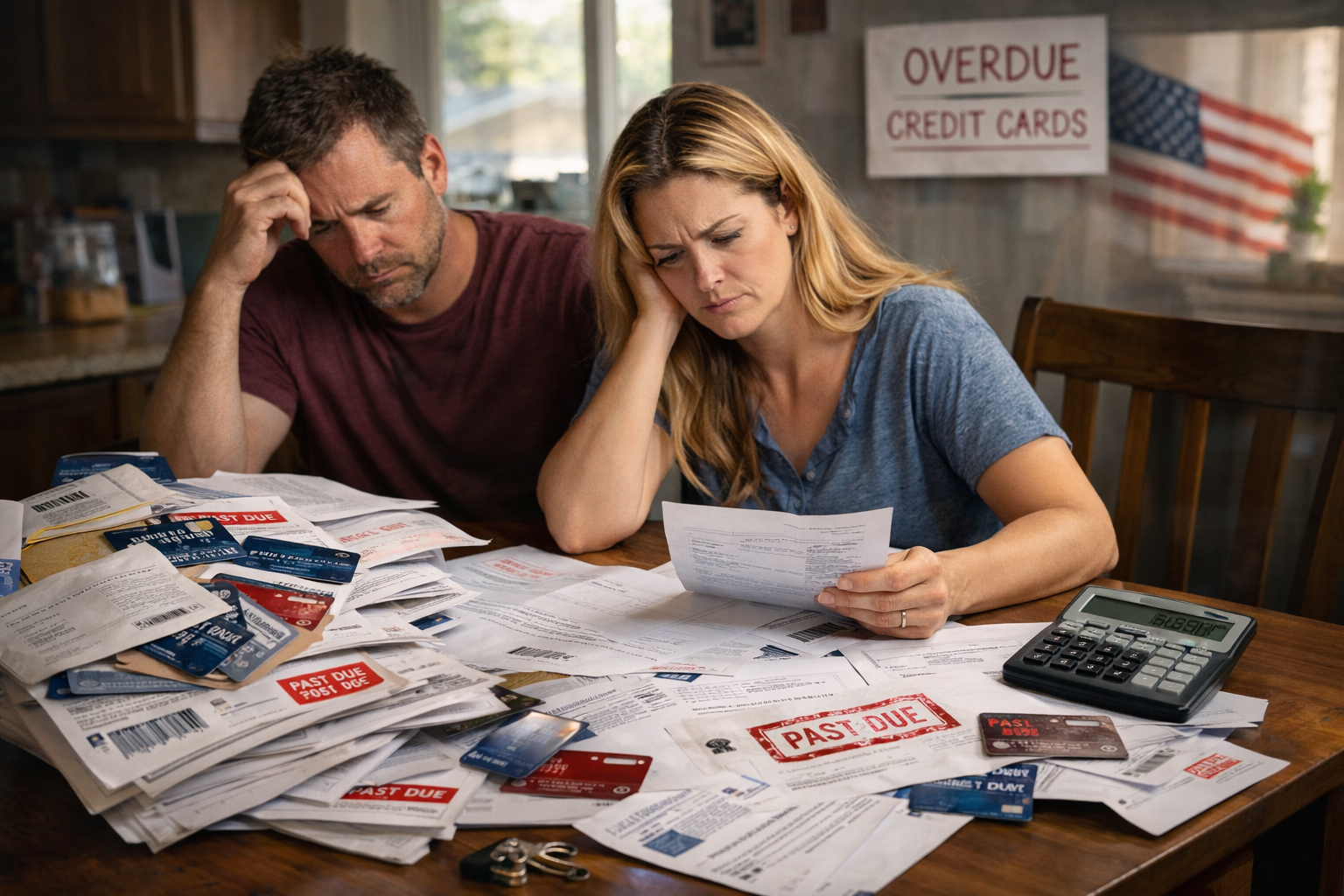
Across the United States, credit card debt is reaching record levels.
Even as inflation slows, millions of Americans are relying on credit just to cover basic expenses.
So what’s really driving this debt explosion?
Living Costs Are Outpacing Income
For many households, wages have not kept up with:
Rent increases Grocery prices Healthcare and insurance Transportation and utilities
Credit cards have become a survival tool, not a luxury.
When monthly expenses exceed income, debt fills the gap.
High Interest Rates Are Making Things Worse
With interest rates still elevated, credit card APRs have surged.
Many cards now charge 20% to 30% APR, turning small balances into long-term financial traps.
This creates a dangerous cycle:
Minimum payments barely reduce balances Interest compounds quickly Debt becomes harder to escape
Emergencies Are Pushing Families Over the Edge
Unexpected expenses — car repairs, medical bills, home maintenance — are pushing people further into debt.
Without savings, credit cards become the only option.
This highlights a deeper issue:
Millions of Americans lack financial buffers.
Who Is Most Affected?
Credit card debt growth is especially strong among:
Middle-income households Young adults and first-time workers Renters facing rising housing costs
These groups are often excluded from asset growth, while still exposed to rising prices.
Why This Is a Warning Sign for the Economy
Rising consumer debt can temporarily support spending, but it weakens long-term economic stability.
When debt becomes unsustainable:
Consumer spending slows Defaults increase Financial stress spreads
This is why economists closely watch household debt levels.
What Could Bring Relief?
Real solutions depend on:
Wage growth that exceeds inflation Lower interest rates More affordable housing Stronger savings habits
Until then, credit cards will remain a financial lifeline — and a growing risk.
Final Thoughts
The explosion of credit card debt isn’t about irresponsibility.
It’s about survival in an economy where costs rise faster than incomes.
And that pressure is reshaping the financial reality of millions of Americans.
About The Author