The banking landscape in the United States is changing faster than ever. In 2025, digital banks—also known as online banks or neobanks—are outperforming many traditional institutions in fees, convenience, and savings rates.
Here’s why millions of Americans are switching and what you need to know before choosing one.
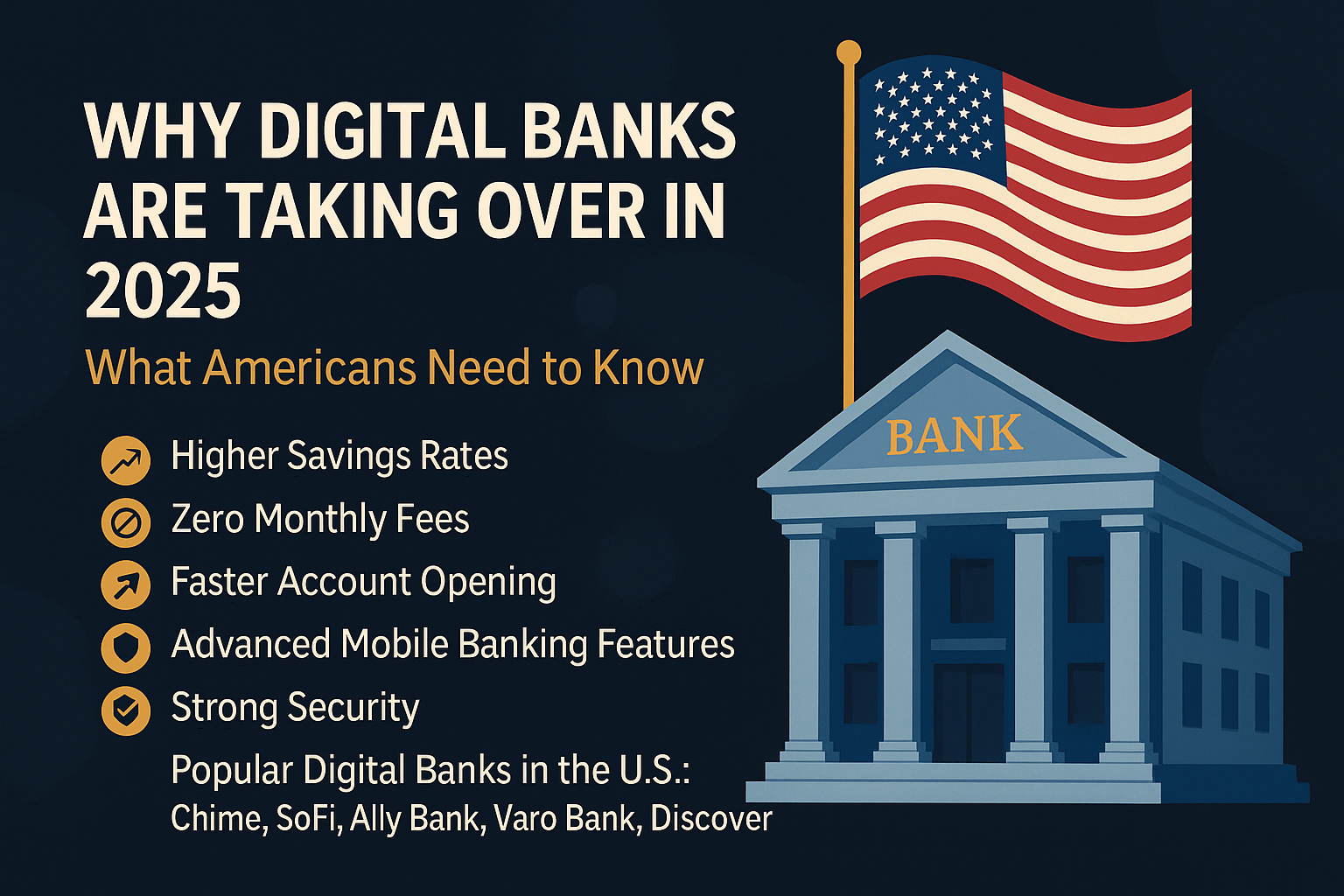
1. Higher Savings Rates
Digital banks typically offer 2x to 4x higher APY than traditional brick-and-mortar banks.
Why?
They operate with lower costs and pass savings to customers.
Common APY ranges in 2025:
Traditional banks: 0.01% – 0.10% Digital banks: 4.00% – 5.25%
2. Zero Monthly Fees
Most digital banks charge no maintenance fees and require no minimum balance.
This attracts beginners and young adults who want transparent, simple banking.
3. Faster Account Opening
Opening a digital account takes under 5 minutes, with:
instant identity verification virtual debit card created immediately app-first onboarding
Traditional banks may still take days.
4. Advanced Mobile Banking Features
Digital banks in 2025 offer:
real-time transaction tracking credit score monitoring AI-based financial advice spending categories instant transfers
The mobile experience is their main competitive advantage.
5. Strong Security + FDIC Protection
Many users still believe digital banks are “less safe.”
In reality, top online banks offer:
FDIC insurance up to $250,000 biometric login fraud alerts encrypted transactions
In terms of safety, they match or exceed traditional institutions.
6. Popular Digital Banks in the U.S. (2025)
These are the most trusted names today:
Chime – Best for beginners SoFi – Best for high-yield savings Ally Bank – Best overall online bank Varo Bank – Best fee-free checking Discover Online Bank – Best cashback debit
Should You Switch in 2025?
You should consider switching if you want:
higher interest rates fewer fees a faster and smarter mobile experience more financial control
Traditional banks remain strong for loans, physical branches, and customer service, but digital banks are quickly becoming the preferred choice for everyday money management.
About The Author