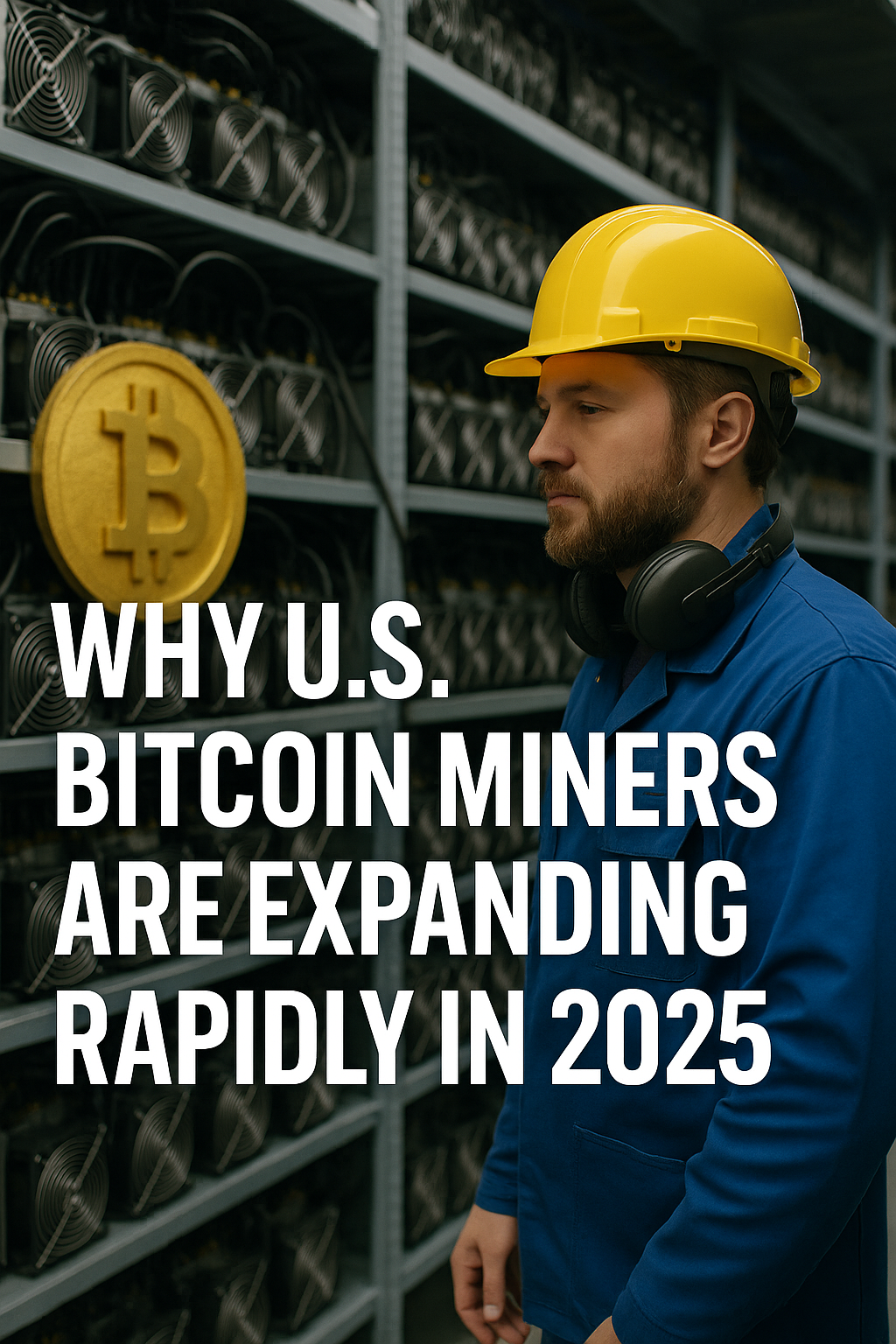
The U.S. has become the world’s leading hub for Bitcoin mining, and the industry is accelerating again in 2025. After a period of volatility and regulatory uncertainty, American miners are now scaling operations at rates not seen since the post-halving boom.
Several powerful forces are pushing mining activity higher — from energy prices to institutional capital and technological breakthroughs.
Here’s why Bitcoin mining in the United States is expanding rapidly this year.
⚡ 1. Lower Energy Costs in Key Mining States
Energy is the largest cost for Bitcoin miners. In 2025, several U.S. states have become energy havens:
🔥 Top mining states with cheap electricity
Texas — abundant natural gas + renewable energy surplus Kentucky — attractive tax incentives for blockchain companies Oklahoma — expanding wind and natural gas capacity North Dakota — using flare gas to power mining operations
Lower electricity prices mean higher profitability — especially post-halving, when block rewards shrink.
🏛️ 2. Institutional Capital Is Flooding Into Mining
Wall Street is going big on Bitcoin mining again.
Large companies, hedge funds, and ETF issuers are reinvesting in:
large-scale mining farms data centers mining equipment (ASICs) renewable-powered energy grids
The approval of the Bitcoin spot ETF in the U.S. caused a major institutional shift, signaling that Bitcoin is now a mainstream asset.
💼 Who is investing?
Private equity firms Infrastructure funds Energy companies Publicly traded miners like Riot, Marathon, and CleanSpark
This new wave of capital is accelerating national expansion.
🤖 3. AI + Bitcoin Mining = A New Industry Model
One of the biggest trends of 2025 is the merging of AI computing with Bitcoin mining infrastructure.
Why? Mining facilities already have:
powerful cooling systems access to cheap energy high-capacity data centers scalable infrastructure
Companies are now integrating:
🚀 AI-driven optimization
temperature control power load balancing automated performance tuning
🚀 Dual-use facilities
Mining farms that run:
AI model training Cloud compute workloads during non-peak mining hours.
This dramatically boosts revenue potential.
🌎 4. Regulatory Clarity in the U.S. Helped the Industry Rebound
After years of uncertainty, the U.S. finally clarified several crypto mining guidelines:
States can define their own mining policies Mining is recognized as a legal, taxable business Environmental standards have clearer compliance paths
This stability encouraged miners to reinvest in long-term projects.
📈 5. Post-Halving Economics Made Growth Necessary
The 2024 Bitcoin halving reduced rewards from 6.25 BTC to 3.125 BTC.
To remain profitable, miners had to:
scale operations upgrade hardware improve efficiency relocate to cheaper energy regions
The result? Mining consolidation and expansion across America.
🧠 Why This Matters for Bitcoin Investors
When U.S. mining expands, it tends to:
strengthen Bitcoin’s network security decentralize hash power away from hostile jurisdictions stabilize mining difficulty over time support long-term institutional trust in Bitcoin
A strong mining industry = a stronger Bitcoin ecosystem.
📝 Conclusion
Bitcoin mining in the United States is entering a new era of industrial-scale growth. With cheaper energy, institutional investment, AI integration, and regulatory clarity, 2025 is shaping up to be one of the most transformative years for the sector.
For investors, this expansion signals increasing network resilience — and rising confidence in Bitcoin’s long-term value.
About The Author