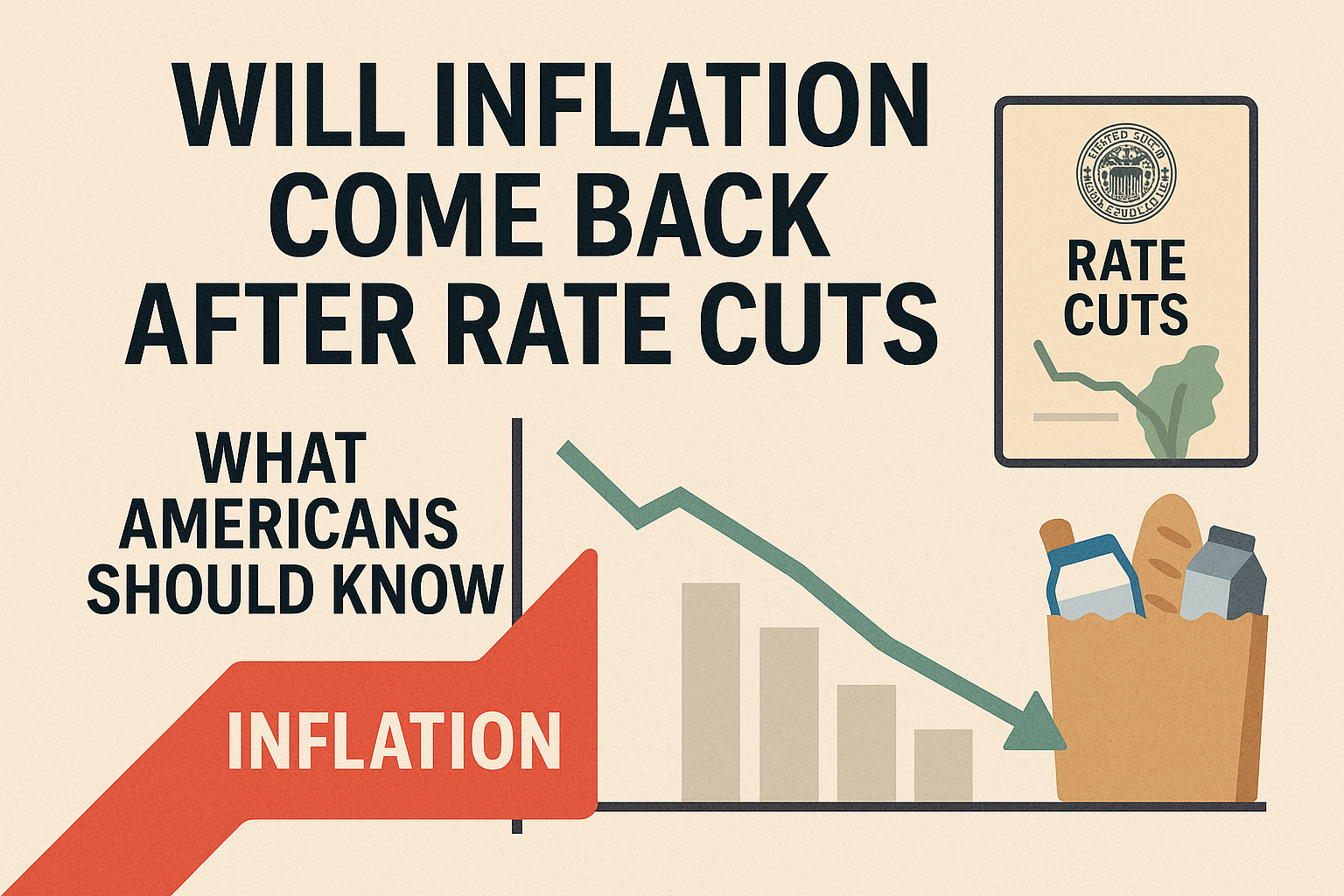
After the Federal Reserve begins cutting interest rates, a common fear returns:
Will inflation come back?
In 2026, as the U.S. economy transitions into a lower-rate environment, understanding the relationship between rate cuts and inflation is critical for consumers, savers, and investors.
Why Inflation Is Linked to Interest Rates
Interest rates directly control how much money circulates in the economy.
High rates reduce borrowing and spending Lower rates increase liquidity and demand
If demand grows faster than supply, prices can rise again.
Does Inflation Always Return After Rate Cuts?
Not always.
Historically:
Moderate rate cuts often stabilize growth without reigniting inflation Aggressive or premature cuts can reheat prices
The outcome depends on:
Labor market strength Consumer demand Supply chain stability Government spending
What the Federal Reserve Is Watching Closely
To prevent inflation from returning, the Fed monitors:
Core inflation (excluding food and energy) Wage growth Consumer spending trends Inflation expectations
The Fed has emphasized a data-dependent approach in 2026.
How Inflation Affects Everyday Americans
If inflation rises again:
Groceries and rent may increase Purchasing power declines Savings lose real value
This is why inflation control remains a top priority for policymakers.
Impact on Investments and Savings
Stocks may benefit initially from lower rates Bonds adjust to new yield expectations High-yield savings accounts may offer lower returns Hard assets often gain attention during inflation fears
Investors must balance growth opportunities with inflation protection.
What Consumers Can Do Now
Smart strategies include:
Managing variable-rate debt Avoiding overleveraging Diversifying investments Keeping an emergency fund
Preparation matters more than prediction.
Final Thoughts
Rate cuts don’t automatically mean inflation will return — but the risk never disappears. In 2026, the Federal Reserve’s challenge is to support growth without losing control of prices.
For Americans, understanding this balance is key to making smarter financial decisions.
About The Author