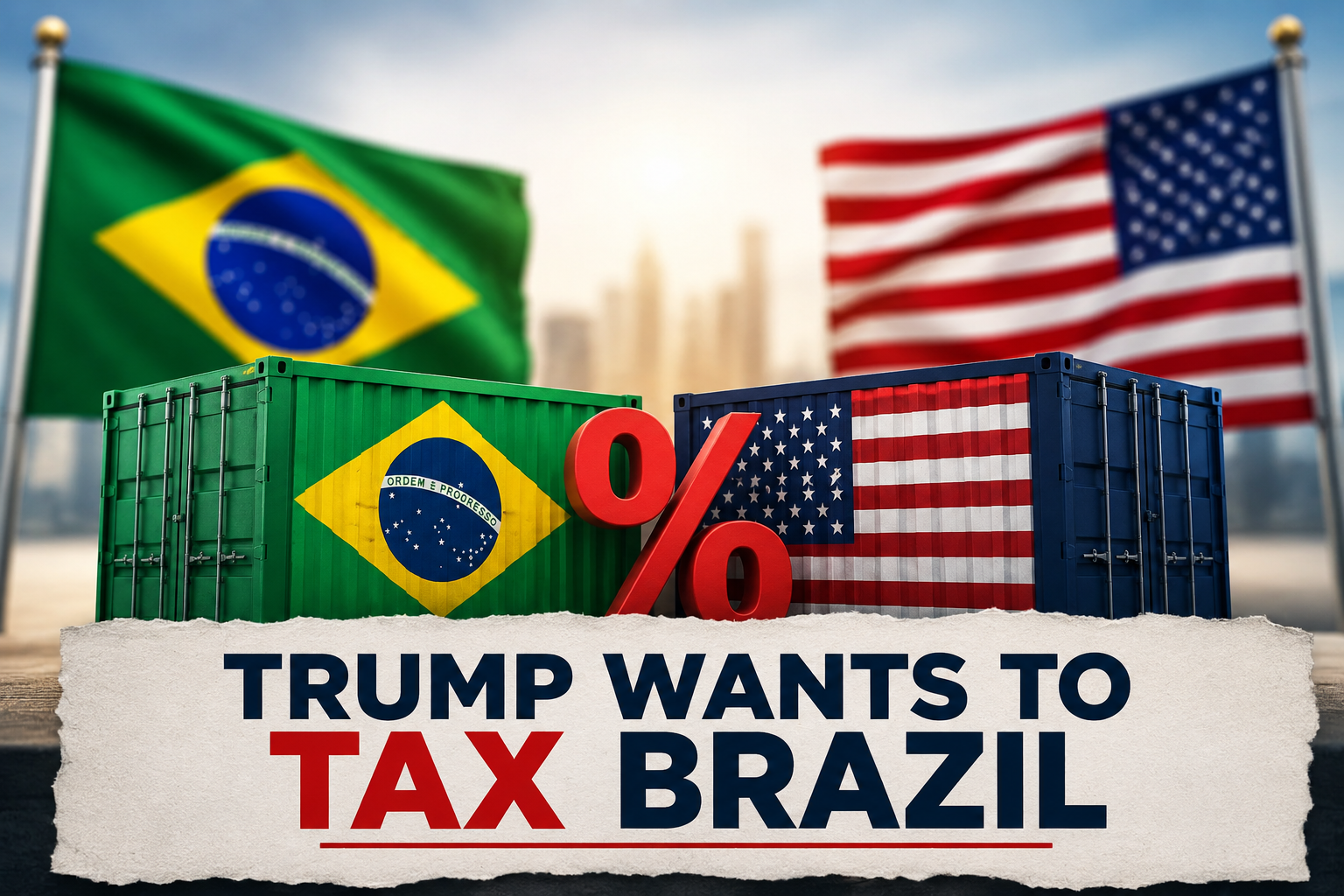
The trade relationship between Brazil and the United States is facing a new challenge after the Trump administration proposed a 25% tariff on many Brazilian imports. The measure comes after a U.S. trade investigation concluded that several Brazilian policies create what Washington describes as unfair barriers to American commerce.
If implemented, the tariffs could become one of the most significant developments in U.S.-Brazil trade relations in recent years.
Why Is Trump Targeting Brazil?
According to the U.S. Trade Representative (USTR), the investigation focused on several areas, including:
- Digital trade regulations;
- Electronic payment services;
- Intellectual property protections;
- Ethanol market access;
- Anti-corruption enforcement;
- Illegal deforestation concerns.
The Trump administration argues that these issues create disadvantages for American businesses operating internationally. As a result, officials proposed a new 25% tariff on a wide range of Brazilian products.
Which Brazilian Products Could Be Affected?
Not every product would be subject to the new tariff.
Several important exports have been excluded from the proposal, including:
- Coffee;
- Beef;
- Aircraft and aircraft parts;
- Rare earth minerals;
- Certain metals;
- Oil and petroleum products.
However, many other Brazilian exports could face higher costs when entering the U.S. market.
Potential Impact on Brazil
If the tariffs take effect, Brazil could face several economic challenges:
Reduced Export Competitiveness
Higher tariffs make Brazilian goods more expensive for American buyers, potentially reducing demand.
Pressure on Businesses
Export-oriented companies may see lower sales and tighter profit margins.
Risk to Jobs
Industries heavily dependent on exports could experience slower growth or workforce reductions.
Currency Volatility
Trade tensions often create uncertainty in financial markets, which can affect exchange rates and investor confidence.
How Is Brazil Responding?
Brazilian officials strongly criticized the proposal and signaled that they may seek diplomatic and trade-related responses if the tariffs are approved. The Brazilian government argues that the accusations are unfair and that the measures represent protectionist trade policies rather than legitimate economic concerns.
Negotiations between both countries are expected to continue before any final decision is made. Public hearings and consultations are scheduled before implementation.
What Happens Next?
The proposal is not yet final.
The U.S. government is collecting public comments and conducting additional reviews before deciding whether the tariffs will officially take effect. Current timelines suggest that a final decision could come during the coming weeks.
Trump’s proposed 25% tariff on Brazilian imports has the potential to reshape trade between the two largest economies in the Americas. While supporters argue it protects American industries, critics warn it could increase costs, disrupt supply chains, and create economic uncertainty on both sides.
For investors, exporters, and policymakers, the next few weeks may prove crucial in determining the future of U.S.-Brazil economic relations.
About The Author